


In a market where every organization uses a customer relationship management system, a CRM alone is no longer a competitive advantage. It's the baseline. High-performing sales teams recognize this gap and are adopting specialized software to turn their strategic goals into front-line execution. The best sales enablement tools equip reps with the right content, coaching, and data at the exact moment they need it, transforming how they engage buyers and close deals.
This guide moves beyond generic marketing copy to deliver an in-depth, practical analysis of the top 12 platforms available. We dissect each tool, revealing its core strengths, honest limitations, and the specific scenarios where it excels. You'll find detailed breakdowns, screenshots, and direct links for each option, from comprehensive content management systems like Seismic and Highspot to critical data enrichment services like Scalelist.
The goal is to help you build a tech stack that actively drives revenue, not just tracks it. We'll explore how these platforms integrate with and extend the functionality of core systems. For instance, beyond basic contact management, exploring the capabilities of a dedicated system like Dynamics 365 Sales CRM shows how specialized tools can empower sales teams with advanced automation and intelligence. This curated list provides the insights you need to select the right solution, whether you're a startup founder, an SDR, or a revenue operations leader aiming to arm your team for success.
1. Scalelist
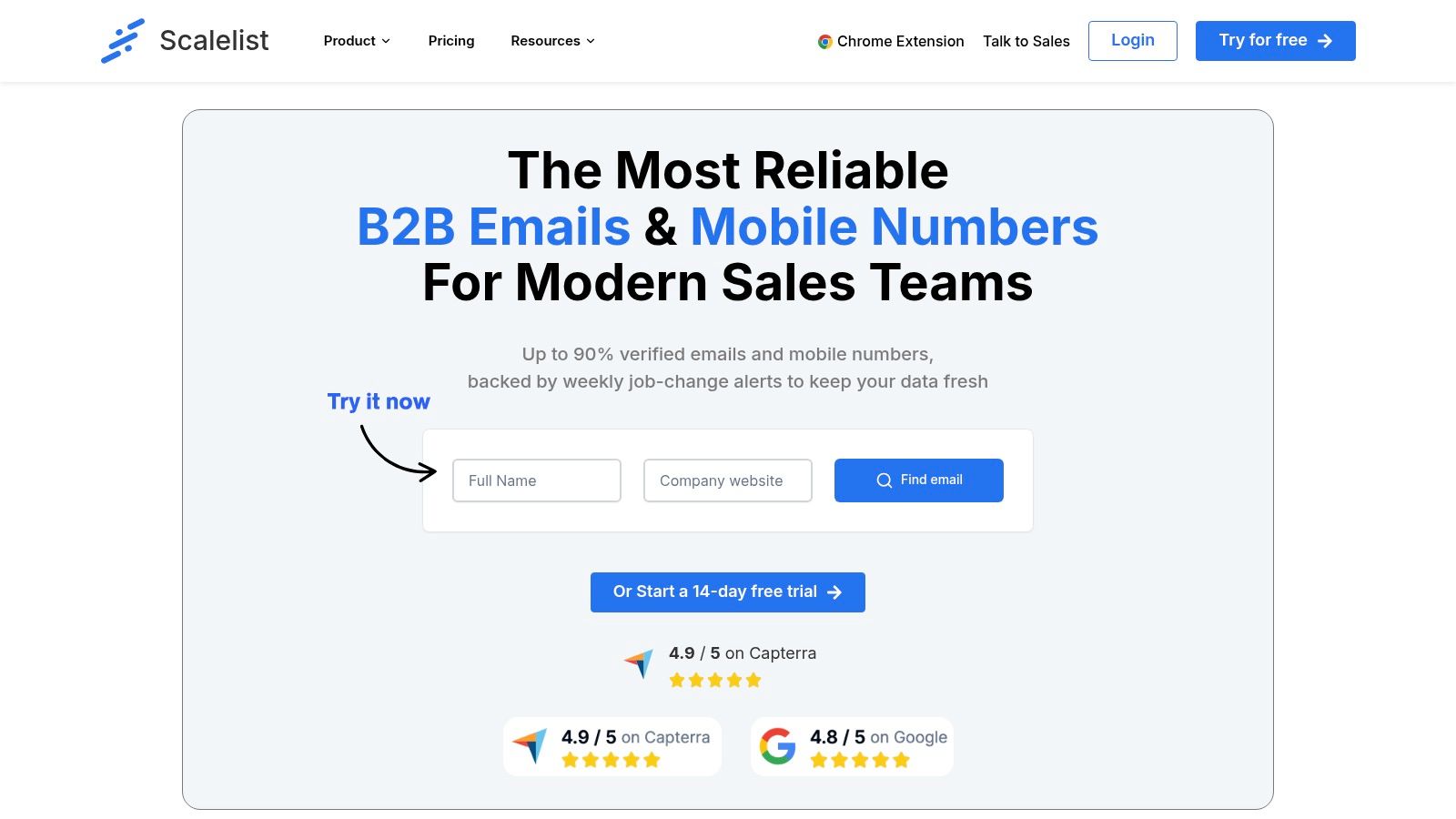
Scalelist secures the top spot as a foundational sales enablement tool, focusing on the critical first step of any successful sales motion: accurate, actionable prospect data. While broader platforms manage the entire sales content lifecycle, Scalelist specializes in equipping teams with high-quality, CRM-ready contact information, ensuring that outreach efforts are built on a solid foundation. Its purpose-built toolkit helps sales teams find, verify, and monitor decision-makers, directly impacting pipeline health and sales velocity. For teams struggling with low data quality, high email bounce rates, and outdated contact lists, Scalelist provides a direct and effective solution.
Why It Stands Out: Data Accuracy and Workflow Efficiency
Scalelist's primary strength lies in its commitment to data integrity. It aggregates information from over ten different providers and applies a built-in verification layer, delivering up to 90% accuracy on work emails and mobile numbers. This significantly reduces the time SDRs waste on prospecting and minimizes the risk of damaging a domain's reputation with high bounce rates.
Another key advantage is its workflow-centric design. The platform’s AI automatically cleans and standardizes data by fixing company names, removing special characters, and formatting fields for direct import into CRMs or outreach tools. Features like the Chrome extension for LinkedIn prospecting, folder-based organization, and simple CSV/Excel exports make it easy for teams to build and manage lists without complex technical overhead. This focus on practical application makes it one of the best sales enablement tools for teams that need to scale their top-of-funnel activities efficiently. A modern sales enablement specialist knows that clean data is the bedrock of predictable revenue.
Key Details & User Profile
| Feature | Details |
|---|---|
| Best For | SDRs/BDRs, AEs, founders, and growth marketers needing reliable B2B contact data. |
| Key Features | Multi-source data aggregation, up to 90% email/mobile verification, AI data hygiene, automated prospect monitoring with job-change alerts, Chrome extension, API access. |
| Integrations | Primarily through CSV/Excel exports and an API. Upcoming native CRM integrations. |
| Pricing | Offers a 14-day free trial with 50 credits. Full pricing requires signup. |
| Pros | High data accuracy reduces bounce rates; AI-powered data cleaning saves time; automated monitoring keeps lists fresh. |
| Cons | Lacks deep, native integrations with major CRMs like Salesforce and HubSpot (listed as upcoming); coverage is not 100%. |
Visit Website: scalelist.com
2. Seismic
Seismic positions itself as an all-in-one, AI-powered revenue enablement platform built for the enterprise. It centralizes sales content, training programs, and coaching into a single system, providing a unified experience for global go-to-market teams. Its core strength lies in connecting enablement activities directly to revenue outcomes through robust analytics.

This platform stands out by consolidating what often requires multiple disparate tools. Seismic combines a powerful content management system with its integrated learning module, Seismic Learning (formerly Lessonly), allowing organizations to manage training and sales materials side-by-side. The system excels at governance, ensuring reps always use compliant, on-brand content.
Core Features & Use Case
- Centralized Content Hub: Organizes all sales and marketing collateral with version control and granular permissions. AI-powered search and recommendations surface the most relevant content for each sales scenario.
- Integrated Learning & Coaching: Develop and deploy training modules, quizzes, and AI-powered practice scenarios directly within the platform. This tight integration helps reinforce the sales operations best practices your team needs to succeed.
- Revenue Impact Analytics: Connects content usage and training completion to CRM data, providing dashboards that correlate enablement efforts with pipeline and revenue.
Pricing & Implementation
Seismic's pricing is custom and tailored to each organization's specific needs, including user count, required modules, and integration complexity. It is generally positioned at the higher end of the market, reflecting its enterprise focus. Implementation can be a significant project, requiring dedicated administrative resources to configure the platform, migrate content, and manage integrations effectively.
Website: https://seismic.com
3. Highspot
Highspot provides a unified sales enablement platform designed to improve the performance of go-to-market teams by bridging the gap between strategy and execution. It centralizes content, training, coaching, and buyer engagement into a single, cohesive system known for its strong user adoption and intuitive interface. The platform’s modular approach allows companies to purchase packages that align with their specific needs, whether it's content management, rep training, or coaching reinforcement.
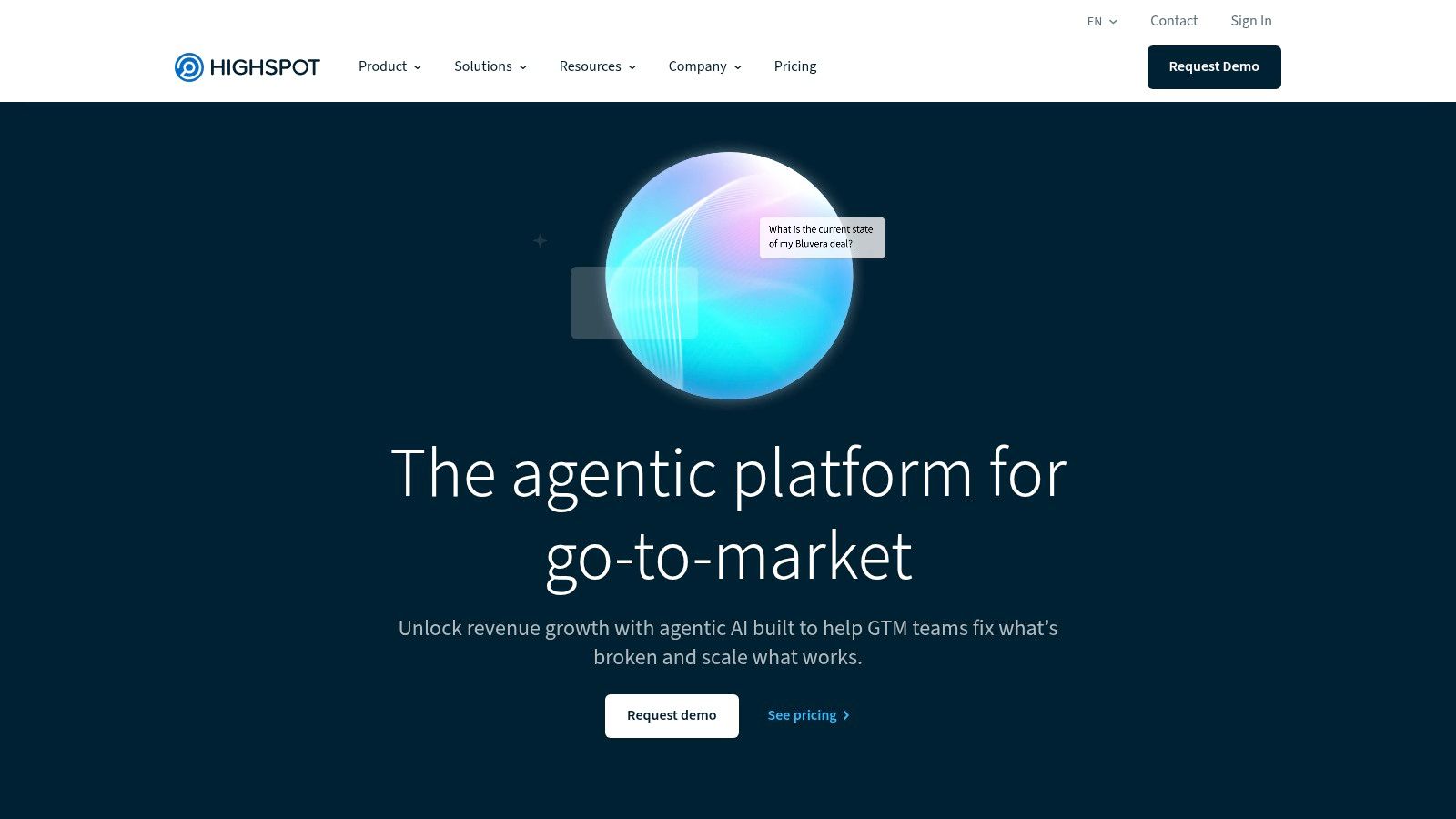
What makes Highspot one of the best sales enablement tools is its focus on equipping, training, and coaching reps within one workflow. The platform excels at creating guided selling experiences through "Sales Plays," which package content, guidance, and actions for specific sales scenarios. Its AI-powered search and recommendations engine ensures reps can quickly find the exact asset they need, while Digital Sales Rooms offer a personalized and trackable buying experience.
Core Features & Use Case
- Guided Selling & Content Management: Delivers AI-powered content recommendations and organizes assets into Sales Plays that guide reps through specific selling motions. This structure is essential for teams learning how to build a sales pipeline with consistent messaging.
- Integrated Training & Coaching: Offers modules for skill development, competency tracking, and AI-assisted practice scenarios. Managers can use scorecards to provide targeted feedback and reinforce winning behaviors.
- Digital Sales Rooms: Create branded microsites for prospects that contain all relevant collateral, communications, and next steps, providing deep analytics on buyer engagement.
Pricing & Implementation
Highspot's pricing is quote-based and not publicly available, tailored to the packages and user count required. A key advantage is that CRM integrations are included natively, avoiding extra line-item costs common with other platforms. Implementation scope and cost vary based on the deployment size and complexity, often requiring dedicated resources to manage content migration and system configuration for maximum impact.
Website: https://www.highspot.com
4. Showpad
Showpad presents itself as a Revenue Enablement Operating System, designed to bridge the gap between sales content effectiveness and buyer engagement. It merges a sophisticated content management system with integrated training, coaching, and buyer-facing collaboration spaces. The platform's main advantage is its dual focus on empowering sellers with the right materials and creating trackable, interactive experiences for prospects.
This platform stands out by creating a direct line between internal enablement efforts and external buyer interactions. Features like Showpad Shared Spaces allow reps to build personalized microsites for each prospect, housing all relevant content and communication in one place. This creates a more professional buying experience while giving sales teams deep insights into how buyers engage with their materials, a key differentiator among the best sales enablement tools.
Core Features & Use Case
- Content Distribution & Governance: A central repository for marketing and sales content that is easily searchable and accessible on any device. Administrators can set permissions and automate content recommendations to ensure brand compliance.
- Coaching & Learning with PitchIQ: Enables reps to practice and record their pitches for manager feedback. It supports the creation of formal learning paths to reinforce training and product knowledge.
- Shared Spaces for Buyer Collaboration: Create branded, digital deal rooms where reps and buyers can access all relevant content and communicate. Engagement tracking provides analytics on which assets are viewed, shared, and for how long.
Pricing & Implementation
Showpad's pricing is not publicly listed and is customized based on user count and the specific modules required. The platform is known for its robust administrator documentation and resources, which can aid in the implementation process. However, advanced features, such as specific identity management integrations, often require a subscription to higher-tier plans, so a detailed needs assessment is recommended before purchase.
Website: https://www.showpad.com
5. Mindtickle
Mindtickle is a comprehensive sales readiness and enablement platform focused on improving seller performance through continuous training, coaching, and skills development. It integrates content management and deal intelligence, aiming to close the gap between a company's sales strategy and its actual field execution. The platform is engineered to prepare reps for real-world scenarios and provide leaders with the data to connect readiness to revenue.
This platform's unique strength is its deep focus on coaching and readiness. While many tools manage content, Mindtickle prioritizes seller competency with features like AI-powered role-plays and readiness scoring. This makes it one of the best sales enablement tools for organizations with complex sales motions that require reps to master difficult conversations and product knowledge. Its system provides a clear picture of which sellers are prepared to win deals.
Core Features & Use Case
- AI-Powered Coaching & Role-Play: Provides a safe environment for reps to practice their pitch against an AI coach, receiving instant, objective feedback. This allows for skills development at scale without occupying manager time.
- Sales Readiness & Training: Delivers targeted learning modules, certifications, and reinforcement activities. Managers can track "Readiness Scores" to identify skills gaps across the team and tie them to performance metrics.
- Deal Intelligence & Conversation Analysis: Connects readiness programs to real-world outcomes by analyzing call recordings and CRM data. It helps identify winning behaviors and areas where reps need more coaching.
Pricing & Implementation
Mindtickle's pricing is quote-based and not publicly available, reflecting its focus on enterprise and mid-market customers with complex needs. The cost depends on the number of users and the specific modules required (e.g., Coaching, Content, Conversation Intelligence). Implementation is a structured process, often involving dedicated support to integrate with CRMs like Salesforce and migrate existing training content.
Website: https://www.mindtickle.com
6. Bigtincan
Bigtincan offers a modular sales enablement platform built around three core pillars: Readiness, Content, and Engagement. This approach allows organizations to adopt a full end-to-end solution or start with a specific area of need, such as content management or sales coaching, and expand over time. The platform is noted for its heavy integration of AI across its product suite, with assistants like SearchAI, MeetingsAI, and RolePlayAI designed to improve seller efficiency.
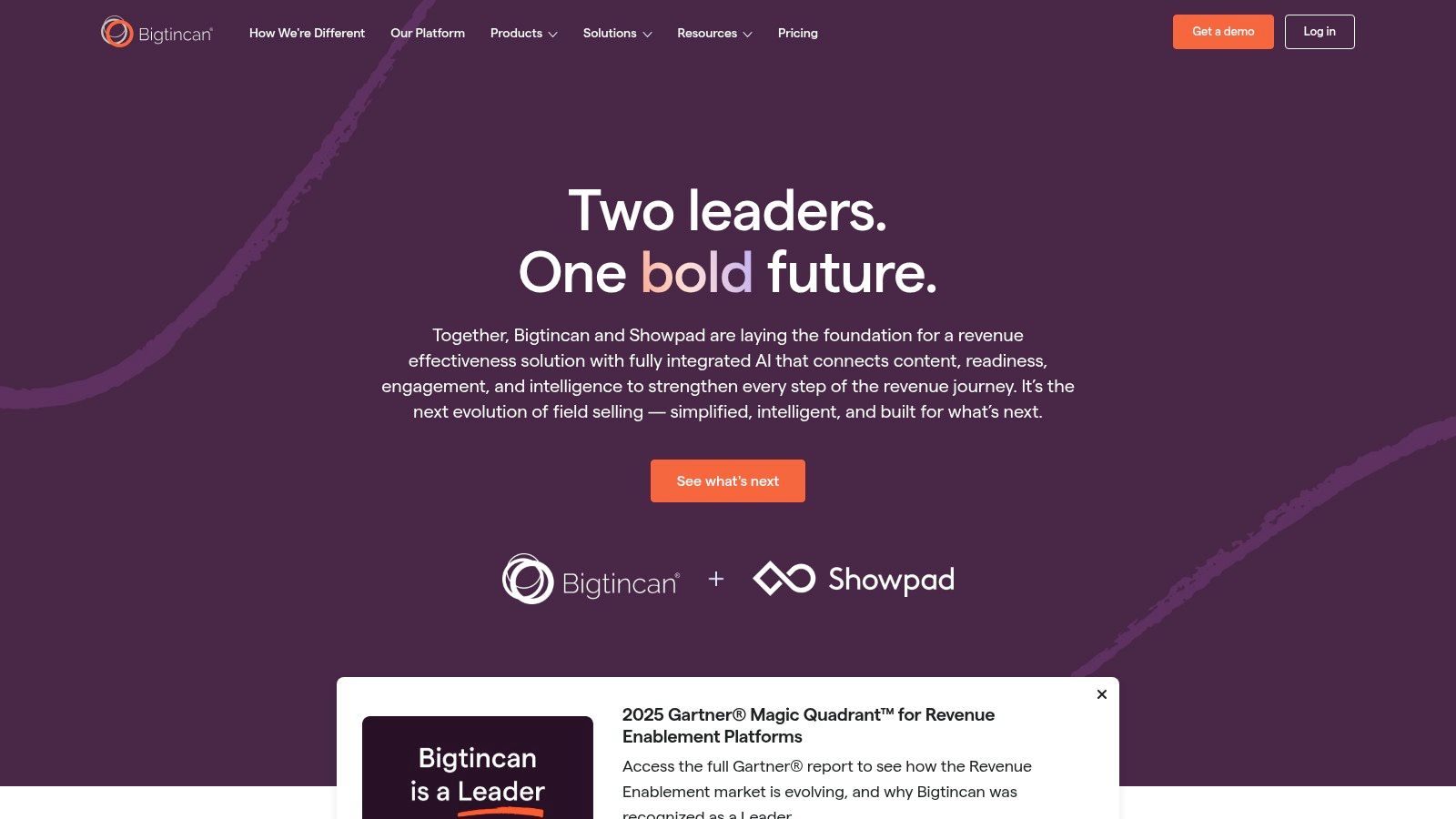
This platform's unique selling proposition is its flexible, multi-product architecture. A team can begin with its content management system and Digital Sales Rooms to solve immediate collateral challenges. Later, they can add the Readiness hub for AI-powered coaching and skill development, making it one of the more adaptable of the best sales enablement tools for growing teams. This phased implementation path can make the platform more accessible than monolithic alternatives.
Core Features & Use Case
- Modular Enablement Suite: Provides separate but integrated solutions for content management (Bigtincan Content Hub), training and coaching (Bigtincan Learning), and buyer engagement (Bigtincan Engagement Hub).
- AI-Driven Coaching & Practice: Includes AI-assisted role-playing scenarios and conversation intelligence that analyzes sales calls to identify coaching opportunities and best practices.
- Digital Sales Rooms (DSRs): Creates collaborative, trackable microsites for prospects, centralizing all relevant content, communications, and meeting notes in one place to guide the buyer's journey.
Pricing & Implementation
Bigtincan's pricing is customized based on the specific products (or "hubs") a customer chooses, user count, and integration requirements. The company does not publish standard pricing, requiring direct engagement with their sales team. Implementation complexity varies depending on the modules deployed; a full platform rollout requires significant planning, while adopting a single hub like the Content Hub can be more straightforward.
Website: https://www.bigtincan.com
7. Allego
Allego offers a consolidated sales enablement platform that combines learning, coaching, content management, and buyer engagement into a single environment. Its main value proposition centers on reducing total cost of ownership and speeding up time to value by bundling features like AI and customer support, which are often add-on costs with other vendors. This approach aims to simplify the tech stack for sales organizations.
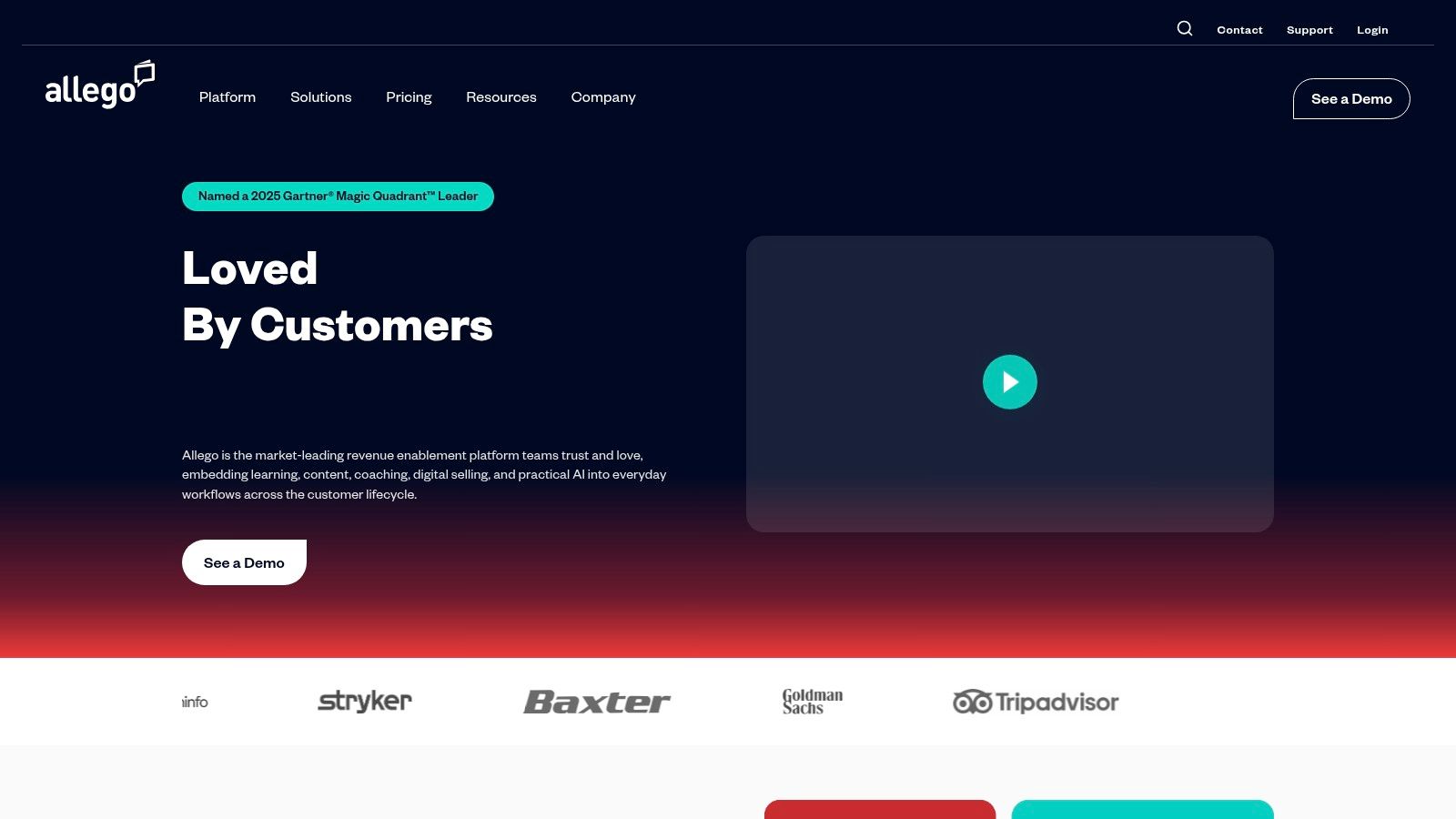
The platform stands out by integrating conversation intelligence directly with its learning and coaching modules. This allows managers to analyze real sales calls and use those moments as teachable opportunities, creating a continuous feedback loop. Allego is designed to be a complete system for both preparing sellers and engaging buyers, from internal training to external collaboration in Digital Sales Rooms.
Core Features & Use Case
- Modern Learning & Coaching: Combines formal training with informal learning, peer-to-peer knowledge sharing, and AI-driven coaching on real-world sales conversations.
- Content Hub & Digital Sales Rooms: Provides a central repository for sales collateral with AI-powered search and analytics on external shares. Its Digital Sales Rooms create a collaborative microsite for prospects to access content and interact with the sales team.
- Bundled AI & Support: Allego includes its AI features and standard customer support in its core pricing, avoiding the surprise fees that can accumulate with other enterprise platforms.
Pricing & Implementation
Allego’s pricing is quote-based and tailored to each organization's size and specific needs. They do not publicly list per-user costs, so a sales engagement is required to get a detailed proposal. Implementation is positioned as faster than some competitors due to its all-in-one nature, which can reduce the complexity of integrating multiple point solutions. However, proper setup still requires a focused effort to migrate content and configure the system.
Website: https://www.allego.com
8. SalesHood
SalesHood is an enablement platform focused on speed and simplicity, combining learning, coaching, and content management for mid-market and growth-stage companies. It stands out by offering transparent, SMB-friendly pricing and pre-built templates, allowing teams to launch enablement programs quickly without extensive configuration. The platform is designed to unite training initiatives with practical sales execution.
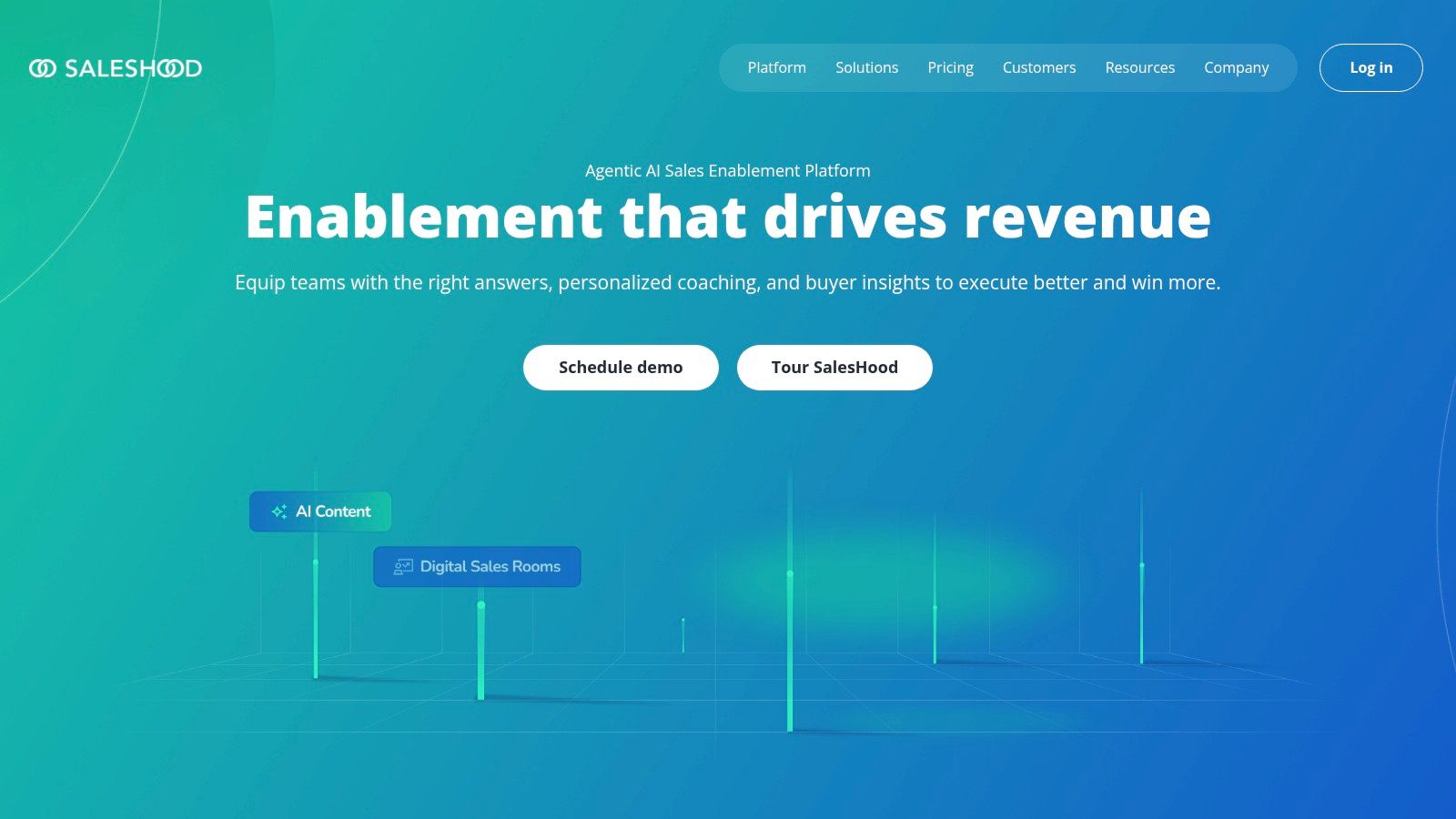
Unlike enterprise-first systems, SalesHood prioritizes a fast time-to-value. Its integrated approach means teams can manage onboarding paths, conduct AI-assisted pitch practice, and deploy content from a single interface. Digital Sales Rooms and mutual action plans are included to improve the buyer experience, making it one of the more accessible, all-in-one solutions for teams needing one of the best sales enablement tools without a massive initial investment.
Core Features & Use Case
- Guided Learning & Coaching: Create structured onboarding and training paths with video-based practice and AI-powered feedback to improve rep confidence and message consistency.
- Digital Sales Rooms: Build collaborative, buyer-centric microsites that consolidate content, communications, and mutual action plans into a single destination for prospects.
- Integrated Content Management: Delivers CRM-integrated content recommendations to reps, ensuring they have the right assets for each stage of the sales cycle.
- Actionable Analytics: Provides dashboards that track content engagement and training completion, linking enablement activities to sales performance metrics.
Pricing & Implementation
SalesHood offers published, tiered pricing, a rarity in the sales enablement space. Plans like "Pro" and "Premium" are clearly defined, making it easier for SMBs and mid-market companies to budget. While advanced AI and analytics are reserved for higher tiers, the platform's template-driven approach supports a much faster and less resource-intensive implementation compared to enterprise competitors.
Website: https://saleshood.com
9. Guru
Guru functions as an AI-powered knowledge management system that delivers verified, trusted information directly into the workflows of sales representatives. It focuses on providing instant, contextual answers within the tools sellers already use, like Slack, Teams, and Salesforce, effectively eliminating the need to hunt for collateral, battle cards, or product updates. Its primary strength is making organizational knowledge immediately accessible at the point of need.
This platform stands out by prioritizing speed and accuracy for in-the-moment enablement questions. Unlike full-suite platforms, Guru’s specialty is capturing and distributing knowledge efficiently. Its verification workflow ensures that reps are always using up-to-date and approved information, which is critical for maintaining consistency and credibility during sales conversations. It's an excellent choice for teams that need to democratize information and reduce repetitive questions.
Core Features & Use Case
- Enterprise AI Search: Allows sellers to ask questions in natural language and receive instant, verified answers sourced from company documents, Slack conversations, and internal wikis, directly in their workflow.
- Knowledge Verification & Governance: Features a system where subject matter experts must periodically review and verify content, ensuring all information remains accurate and trustworthy.
- Broad Integrations: Connects with over 100 applications, including CRMs and communication platforms, to surface relevant knowledge cards and answers without requiring users to switch tabs or applications.
Pricing & Implementation
Guru offers transparent, public pricing tiers starting with a free plan for small teams. Paid plans scale based on user count and feature access, making it accessible for startups and growing businesses. Implementation is generally straightforward compared to enterprise suites, focusing on connecting data sources and establishing a content verification process. Success with Guru depends on building a culture of active knowledge sharing and maintenance.
Website: https://www.getguru.com
10. Spekit
Spekit delivers just-in-time sales enablement directly within the tools your reps use every day. It focuses on reinforcing training and surfacing critical knowledge at the moment of need through a browser extension and in-app experiences. This approach minimizes context switching and makes learning a continuous part of the workflow, rather than a separate, disruptive activity.
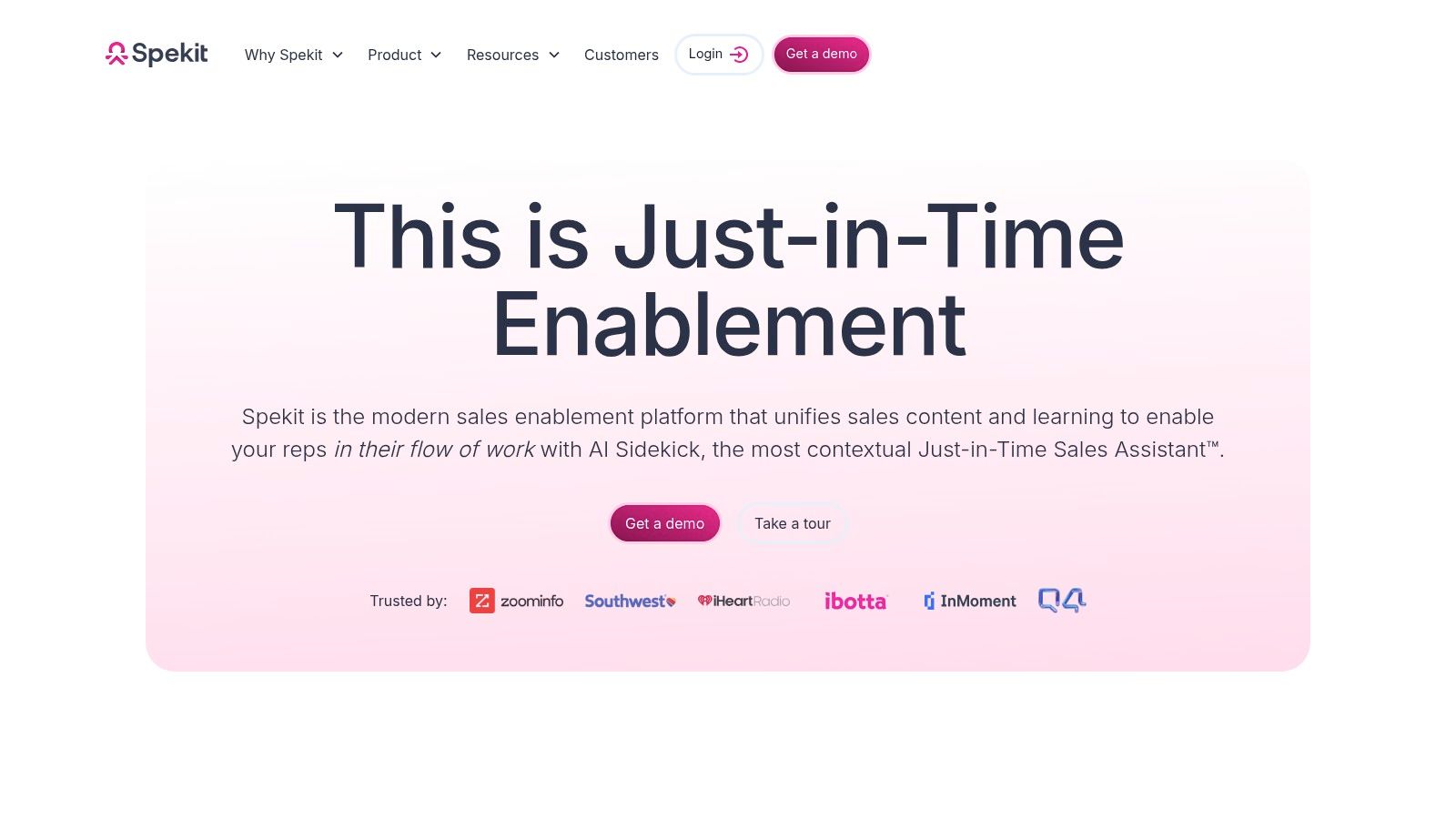
The platform's core advantage is its lightweight, "in-the-flow" delivery mechanism, making it one of the best sales enablement tools for companies focused on rapid change management and consistent process adoption. Instead of asking reps to hunt for information in a separate portal, Spekit embeds answers, playbooks, and coaching directly into their CRM, email, and other sales applications. This makes it an ideal solution for reinforcing new methodologies or guiding reps through complex processes in real-time.
Core Features & Use Case
- AI Sidekick & Chrome Extension: Surfaces contextual answers, content, and training from your knowledge base directly within a rep’s workflow. The AI Sidekick provides instant guidance across various sales tools.
- In-App Guided Experiences: Create tooltips, pop-ups, and walkthroughs inside your CRM to guide users through processes step-by-step, ensuring data integrity and correct procedure following.
- Lightweight Deal Rooms: Facilitate deal-level collaboration with buyers by sharing content and receiving alerts on engagement, keeping momentum high.
Pricing & Implementation
Spekit's pricing is not publicly listed and requires engaging with their sales team for a custom quote, which may be based on user count and feature sets. Implementation is generally fast with minimal integration overhead compared to heavier enterprise platforms, as its primary value comes from its browser extension and overlay technology. This makes it a strong choice for teams needing quick deployment and immediate impact on day-to-day rep efficiency and process adherence.
Website: https://www.spekit.com
11. GetAccept
GetAccept focuses on the deal-closing stage of the sales process by providing a unified Digital Sales Room. It centralizes all deal-related assets like proposals, contracts, and pricing tables into a single buyer-facing workspace. The platform's main objective is to reduce friction in the final stages of a sale by combining content sharing, buyer-seller chat, and e-signatures in one place.
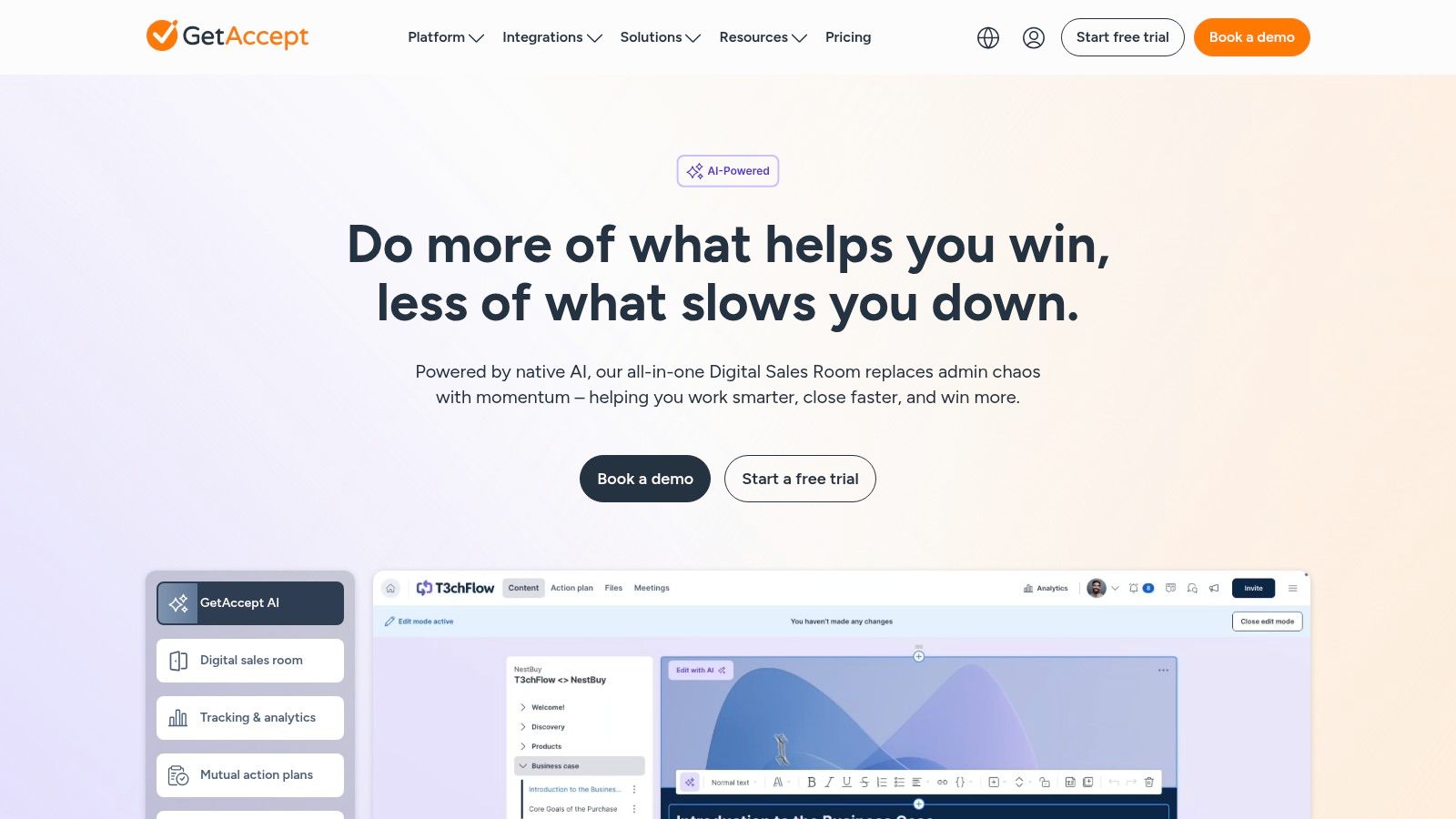
What makes GetAccept one of the best sales enablement tools is its consolidation of several late-stage sales functions. Instead of sending proposals via email, managing pricing in a separate CPQ, and using a third-party e-signature tool, reps can manage the entire flow from a single branded hub. This approach gives sellers deep insights into how buyers engage with their content, helping improve forecasting and follow-up timing.
Core Features & Use Case
- Digital Sales Rooms: Create templated, buyer-specific hubs that contain all necessary sales collateral, videos, and interactive pricing tables.
- Engagement Analytics: Track precisely how and when prospects view documents, watch videos, or share content with colleagues, providing signals on deal health.
- Native Contracting & E-Signature: Streamline the contract workflow with built-in, legally binding e-signature capabilities, eliminating the need for a separate subscription.
Pricing & Implementation
GetAccept offers several tiers, including eSign and Professional plans, with pricing that often varies by region and requires vendor engagement for specifics. The platform integrates directly into major CRMs like HubSpot and Salesforce, allowing AEs to create and send sales rooms without leaving their primary workspace. Implementation is generally straightforward for small to mid-sized teams, focusing on template creation and CRM connection.
Website: https://www.getaccept.com
12. Paperflite
Paperflite is a content-led revenue enablement platform that excels at organizing, personalizing, and distributing sales collateral through dynamic, engaging formats. Its approach centers on creating Netflix-style content hubs and branded digital deal rooms, turning passive documents into interactive buyer experiences. The platform is designed to provide sales teams with an intuitive way to share materials and gain deep insights into prospect engagement.

This tool stands out for its focus on the "last mile" of content delivery. Instead of just storing files, Paperflite helps reps build and share polished, trackable microsites for each deal. This content-first workflow makes it particularly easy for SDRs and AEs to adopt, as it directly supports their daily outreach and follow-up activities. The platform’s analytics close the feedback loop by showing what content resonates with buyers.
Core Features & Use Case
- Personalized Content Microsites: Create and share branded digital deal rooms or content hubs tailored to specific prospects. This is ideal for account-based marketing (ABM) plays where a curated experience is critical.
- AI-Powered Content Discovery: An intelligent recommendation engine helps sales reps find the most effective content for their specific deal stage, industry, or buyer persona.
- Deep Content Analytics: Track detailed buyer engagement metrics, including views, time spent on each page, and downloads. This data integrates with CRMs to connect content performance to pipeline velocity.
Pricing & Implementation
Paperflite offers public pricing tiers, which is helpful for SMB and mid-market teams needing to budget. Plans start with a free tier and scale up to professional and enterprise levels. However, advanced features like white-labeling and dedicated enterprise services require a custom quote. Prospective buyers should verify current pricing directly, as some legacy information may be present on the site. Implementation is generally straightforward for core features, focusing on content migration and CRM integration.
Website: https://www.paperflite.com
Top 12 Sales Enablement Tools Comparison
| Product | ✨ Core features | ★ Quality & trust | 💰 Price & value | 👥 Target audience | ✨ Unique selling point |
|---|---|---|---|---|---|
| Scalelist 🏆 | Contact search & enrichment; 10+ data sources; verification; CRM-ready exports | 4.9/5 ★★★★★; ~90% verified; 7k+ companies | Free 14‑day trial + 50 starter credits; paid tiers via sales 💰 | 👥 SDRs/BDRs, AEs, RevOps, growth teams | ✨ AI data hygiene + automated prospect monitoring |
| Seismic | Centralized content, learning, AI guidance, analytics, governance | Enterprise-grade; analyst-recognized ★★★★ | Custom/enterprise pricing; higher TCO 💰 | 👥 Large/global GTM & enablement orgs | ✨ Governed content + revenue-impact analytics |
| Highspot | Content mgmt, digital sales rooms, training, AI search | Strong user adoption; native CRM integrations ★★★★ | Modular packages; quote-based 💰 | 👥 Mid-market → enterprise sales & enablement | ✨ AI search + native CRM syncs |
| Showpad | Content distribution, coaching (PitchIQ), buyer collaboration | Mature platform; strong docs & governance ★★★★ | Limited public pricing; quote tiers 💰 | 👥 Sales teams needing buyer-facing workspaces | ✨ Shared buyer Spaces & pitch practice |
| Mindtickle | Training, coaching, AI role-play, readiness scoring | Gartner-recognized; enterprise focus ★★★★ | Quote-based, enterprise pricing 💰 | 👥 Enterprises with complex sales motions | ✨ Readiness scoring + AI role-play |
| Bigtincan | Readiness, DSRs, coaching, convo intelligence, AI assistants | Comprehensive suite; phased adoption ★★★★ | Pricing via sales engagement 💰 | 👥 Teams needing end-to-end enablement | ✨ Multiple AI assistants across product |
| Allego | LMS/LXP, coaching, convo intelligence, digital sales rooms | Bundled AI & support; TTV focus ★★★★ | Quote-based; claims no extra AI fees 💰 | 👥 Teams seeking bundled AI & faster TTV | ✨ Bundled AI + support to reduce TCO |
| SalesHood | LMS, onboarding, pitch practice, DSRs, CRM recommendations | SMB-friendly; clear tiering ★★★★ | Published pricing and tiers 💰 | 👥 Mid-market & growth-stage teams | ✨ Transparent pricing + rollout templates |
| Guru | Verified knowledge, AI agents, enterprise search & integrations | Secure (SOC2), transparent entry pricing ★★★★ | Entry pricing + usage scaling 💰 | 👥 Teams needing in-flow knowledge for sellers | ✨ Verified knowledge + 100+ integrations |
| Spekit | Just-in-time enablement, Chrome ext, AI Sidekick, deal rooms | Fast deploy; in-app UX focus ★★★★ | Pricing varies; may require sales 💰 | 👥 Change mgmt & daily rep coaching | ✨ AI Sidekick + contextual in-app guidance |
| GetAccept | Digital Sales Rooms, chat, pricing/CPQ, e-sign, CRM embed | Buyer engagement analytics; reduces tool toggling ★★★★ | Region/tier varies; verify with vendor 💰 | 👥 AEs, RevOps needing DSR + contracting | ✨ DSR + native e-sign & CPQ workflows |
| Paperflite | Content hubs, personalized microsites, DSRs, analytics | Content-first UX; public tier guidance ★★★★ | Public tiers (some legacy pages, verify) 💰 | 👥 SDRs/AEs focused on content & branding | ✨ Branded microsites + deep content analytics |
Making Your Final Decision: It's About Integration, Not Just Features
We've explored a wide array of the best sales enablement tools, from comprehensive content management suites like Seismic and Highspot to specialized training platforms like Mindtickle and just-in-time learning aids like Spekit. Each tool offers a distinct approach to solving the core challenges of modern sales: arming reps with the right knowledge, content, and skills exactly when they need them. The key takeaway is that the "best" tool is not a one-size-fits-all solution; it is the one that most directly addresses your team's specific bottlenecks.
Before you make a final selection, take a step back from feature lists and demo calls. The true power of any sales enablement platform is realized not in isolation, but through its seamless integration into your existing workflows. A brilliant content portal is useless if it doesn't connect with your CRM. A state-of-the-art coaching tool will fall flat if it isn't informed by real performance data. Your decision-making process should prioritize how a new tool will connect with and amplify the systems you already depend on.
The Foundation: Data Quality Dictates Success
The most critical, yet often overlooked, element in this equation is the quality of your underlying sales data. You can equip your sales team with the most advanced content recommendations from Showpad or the most engaging training modules from Allego, but if they are reaching out to outdated contacts or targeting the wrong accounts, their efforts will be wasted. The effectiveness of your entire sales tech stack rests on a foundation of accurate, up-to-date prospect information.
This is where a strategic approach to data enrichment becomes non-negotiable. An enablement platform can tell your reps what to say and how to say it, but it cannot function optimally without clean data telling them who to contact. Without reliable contact information and timely intelligence on job changes, even the most skilled and well-equipped salesperson is operating at a significant disadvantage.
Actionable Steps to Choosing Your Tool
To move forward, focus on a clear, diagnostic approach rather than just comparing features.
- Identify Your Primary Pain Point: Don't try to solve every problem at once. Is your biggest hurdle content chaos, inconsistent rep performance, or low buyer engagement? Pinpoint the single most significant issue and search for tools that specialize in solving it.
- Map Your Existing Tech Stack: Create a visual map of your current tools (CRM, marketing automation, communication platforms). Assess how each potential enablement tool will plug into this ecosystem. Prioritize platforms with robust, native integrations.
- Run a Pilot Program: Instead of a company-wide rollout, select a small, representative group of salespeople to test your top two choices. Gather their direct feedback on usability, workflow disruption, and actual impact on their daily tasks.
- Prioritize Data Integrity First: Before you invest heavily in a new platform, audit your current contact data. A tool like Scalelist can clean, enrich, and validate your CRM data, ensuring that any new system you implement is powered by accurate information from day one.
Ultimately, selecting from the best sales enablement tools is an exercise in building a connected, efficient system. It’s about creating an environment where your reps have frictionless access to the content, training, and, most importantly, the accurate contact data they need to build relationships and close deals. The right platform will feel less like another piece of software and more like a natural extension of your sales process, empowering your team to perform at its peak.
Don't let poor data undermine your investment in a new enablement platform. Scalelist provides the clean, verified B2B contact and company data your team needs to ensure every outreach effort counts. Start with a foundation of accurate prospect information to maximize the ROI of your entire sales tech stack by visiting Scalelist.


