


In B2B sales, silence rarely means ‘no’. It usually means ‘busy’. The critical difference between a closed deal and a lost lead often hinges on the persistence and quality of your follow-up. Yet, countless follow-up emails are deleted before they're ever opened, sabotaged by a weak, generic, or forgettable subject line. This guide is built to fix that.
We are breaking down 10 battle-tested templates for a compelling email subject line for follow up, specifically designed for modern SDRs, Account Executives, and founders. We will move beyond just listing examples and dive deep into the strategic psychology behind why each one works.
You will find tactical analysis, personalization hooks, and actionable takeaways for every template, plus quick subject lines by situation (after a meeting, an event, a call or no reply) and a short FAQ.
The short answer: a good follow-up email subject line names the topic or the last thing you discussed, stays short enough to read on a phone, and never says only "Following up". When the prospect already saw your first email, reply in the same thread so the history stays visible; start a new subject line when you bring something new, such as a resource, a referral or a trigger event.
Last updated: 14 November 2026.
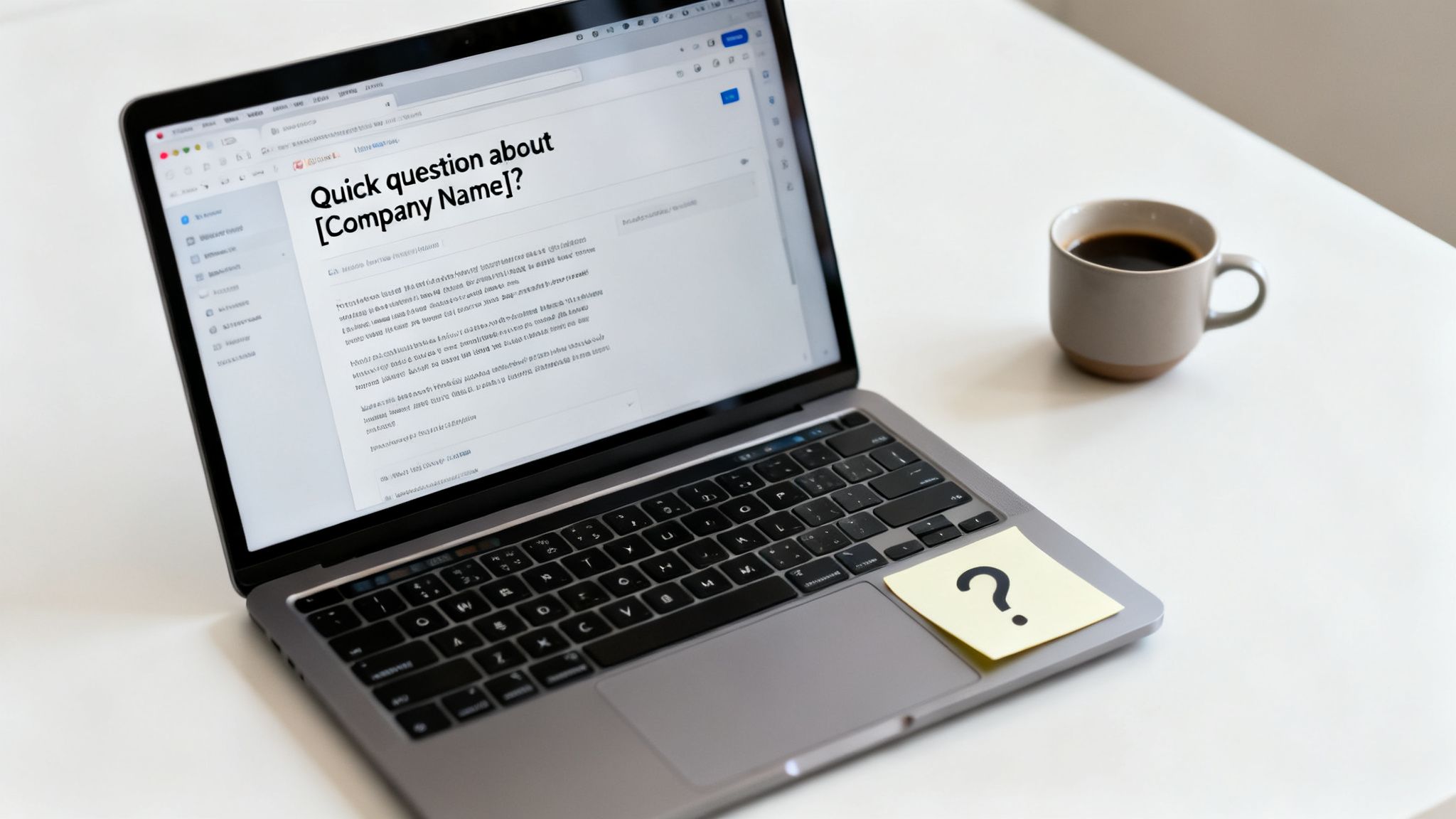
1. Question-Based Follow-Up: 'Quick question about [Company Name]'
This subject line uses curiosity to drive opens. By framing your outreach as a "quick question," you lower the perceived commitment from the recipient. Including their company name adds a crucial layer of personalization, signaling that this isn't a generic blast but a targeted, relevant email subject line for follow up. It's an effective way to re-engage a prospect without sounding overly aggressive or sales-heavy.
Strategic Breakdown
This approach works by creating an information gap. The recipient sees a question about their own company and naturally wants to know what it is. It feels less like a sales pitch and more like a genuine inquiry, making it highly effective for SDRs aiming to start a conversation rather than just book a meeting on the first touch.
Actionable Tips for Implementation
- Be Specific: Instead of a generic question, tie it to a recent trigger event. For example, use company intelligence to reference a recent funding round or expansion.
- Align Body with Subject: The question in your email body must directly relate to the curiosity you built. Don't use this as a bait-and-switch.
- Test and Iterate: Try variations like "Quick question about your Q4 hiring" or "Question about [Specific Initiative]" to see what resonates with your target persona.
Key Insight: The goal is to make opening the email feel like a low-effort, high-curiosity action. The personalization with
[Company Name]is non-negotiable as it validates the sender's intent and relevance.
2. Urgency-Driven Follow-Up: 'Following up on our conversation'
This subject line is a classic for a reason: it's direct, professional, and immediately re-establishes context. By referencing a previous interaction, it cuts through the noise of generic cold outreach, reminding the prospect that you aren't a stranger. It’s the perfect email subject line for follow up when you need to re-engage a warm lead or continue a stalled discussion, creating a subtle sense of urgency to pick things back up. This approach is most effective when genuine two-way dialogue has already occurred.
Strategic Breakdown
The strength of this subject line lies in its ability to use prior engagement as a social hook. It signals that the recipient has already invested time and attention, making them more likely to re-invest by opening the email. It's a low-friction way to restart a conversation without needing to re-introduce yourself or your value proposition from scratch, making it ideal for the second or third touch in a sales cadence.
Actionable Tips for Implementation
- Reference Specifics: In the email body, immediately mention a concrete detail from the last interaction. For example, "Following up on our chat about your team's Q4 sales enablement goals."
- Add a Clear CTA: Don't leave the next step ambiguous. Propose a clear and easy action, like "Do you have 15 minutes on Thursday to continue our discussion?"
- Time it Right: Send this subject line 3 to 5 business days after your initial conversation to remain top-of-mind without seeming impatient. For more advanced timing strategies, you can see our follow-up email templates for every call outcome.
Key Insight: This subject line's power comes from memory recall. It acts as an instant reminder of a previous commitment or shared context, compelling the recipient to open the email to close the loop on an unfinished conversation.
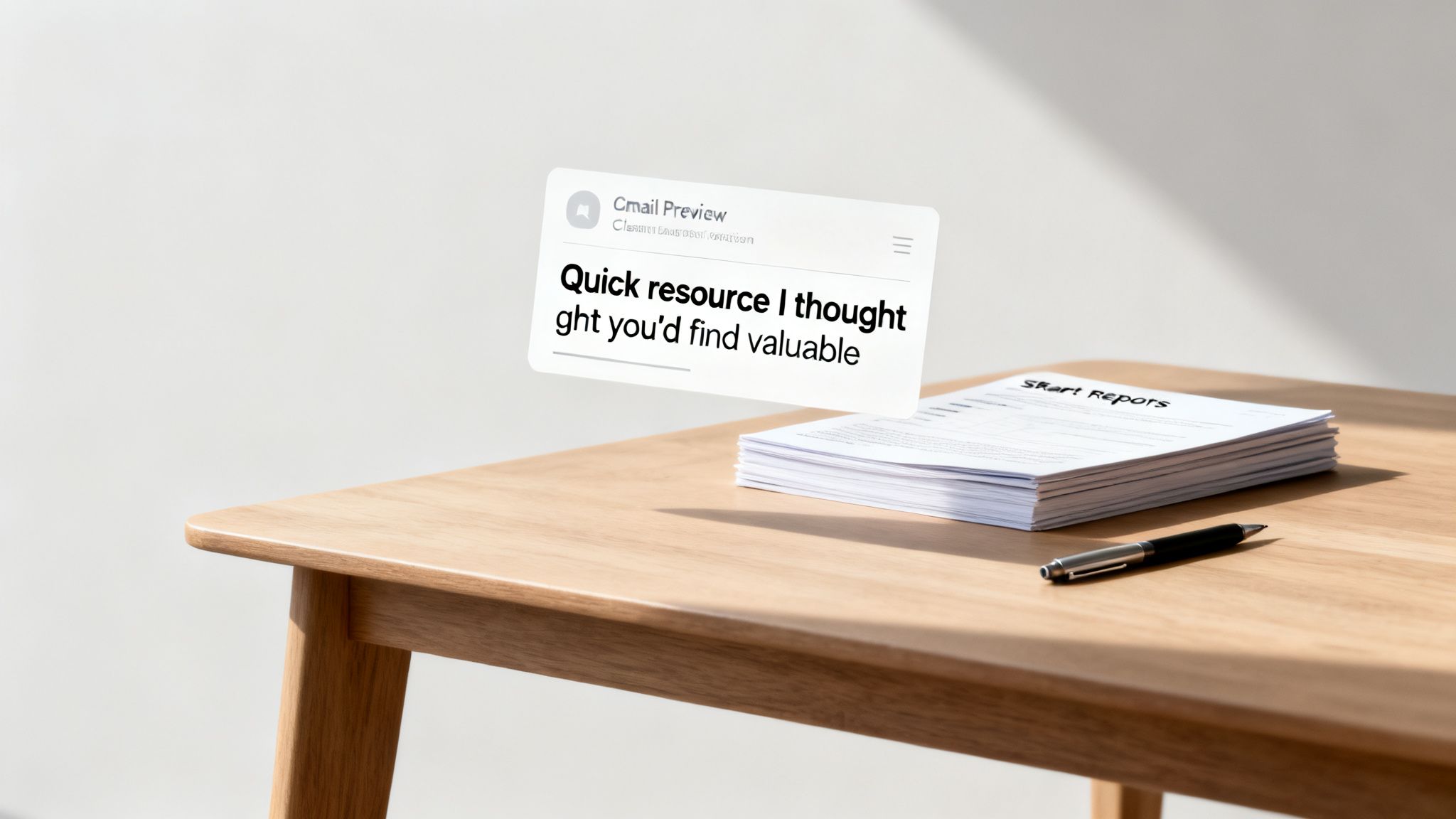
3. Value-First Follow-Up: 'Quick resource I thought you'd find valuable'
This subject line flips the script by leading with generosity instead of a request. By offering a "valuable resource," you immediately position yourself as a helpful expert rather than just another salesperson. It's a powerful way to build trust and re-engage a prospect because it focuses entirely on their needs, making it a highly effective email subject line for follow up. This approach works well for nurturing relationships with B2B decision-makers who are often inundated with asks.
Strategic Breakdown
The core strategy here is reciprocity. When you provide genuine value upfront without asking for anything in return, you create a positive impression and a subtle psychological pull for the recipient to engage. Unlike a direct sales pitch, this method lowers defenses and frames the interaction as a partnership, which is crucial for long-term B2B sales cycles. It proves you've done your homework and understand their challenges.
Actionable Tips for Implementation
- Hyper-Personalize the Resource: Use enriched data to understand a prospect's specific role, industry, and company challenges. A marketing VP might value a report on MarTech ROI, while a CFO would prefer one on cost optimization.
- Be Ultra-Specific: Enhance your subject line for better impact. Instead of a generic "resource," try "Article on data enrichment for SaaS" or "Case study on productivity for teams like yours."
- Connect to Pain Points: In the email body, briefly explain why you thought of them for this specific resource. For example, mention it relates to a goal they shared in a previous conversation or a common industry trend.
Key Insight: The value offered must be authentic and genuinely useful to the recipient's role. This isn't about sending your company's latest blog post; it's about providing a solution-oriented piece of content that builds your credibility and keeps the conversation warm.
4. Time-Sensitive Follow-Up: '[Name], did this get buried in your inbox?'
This subject line uses empathy and a touch of lightheartedness to re-engage a prospect. It acknowledges the universal reality of an overflowing inbox, framing your follow-up as helpful rather than pushy. Personalizing it with the recipient's name is crucial, as it immediately grabs their attention and signals that this isn't an automated blast. This approach is a soft-nudge email subject line for follow up that feels human and relatable, making it effective after an initial email has gone unanswered.
Strategic Breakdown
This tactic works by giving the recipient an easy "out." Instead of making them feel guilty for not responding, you provide a plausible, low-pressure reason: their busy schedule. This lowers their defensive barriers and makes them more likely to open the email to see what they might have missed. It’s a pattern interrupt that stands out from generic follow-ups like "Checking in" or "Following up."
Actionable Tips for Implementation
- Timing is Key: Deploy this subject line for your second or third touchpoint. Using it too early seems impatient, and using it too late loses its impact.
- Keep the Body Concise: Your email body should immediately reference the previous message and reiterate the core value proposition in a single sentence.
- Maintain a Professional Tone: While the subject is slightly informal, ensure the email's content remains professional and focused on providing value.
Key Insight: The success of this subject line lies in its blend of personalization and empathy. It validates the prospect's busy reality, which builds rapport and increases the likelihood of getting a response over a more demanding-sounding follow-up.
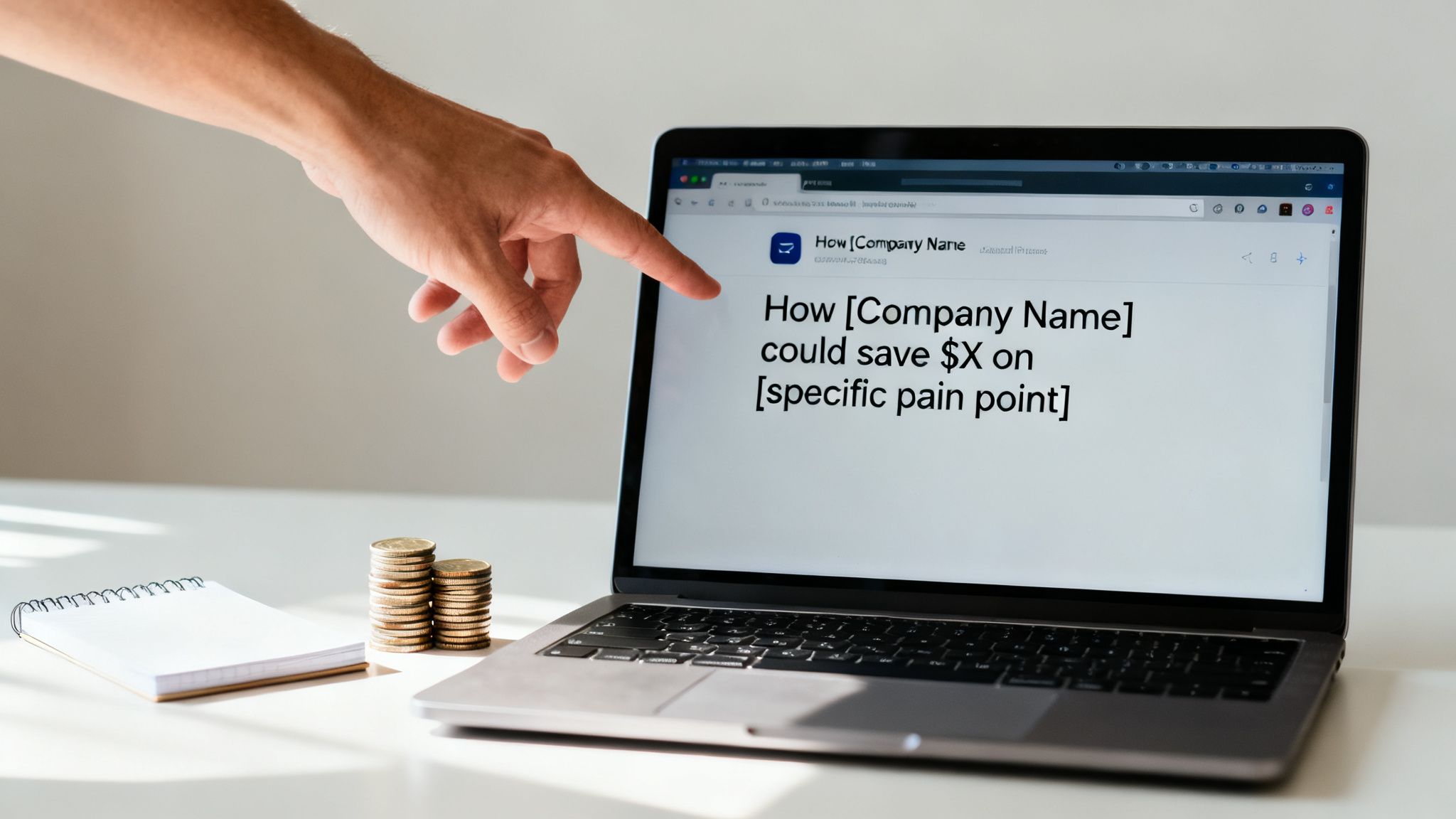
5. Benefit-Focused Follow-Up: 'How [Company Name] could save $X on [specific pain point]'
This subject line immediately communicates value by tying a quantifiable outcome directly to a prospect's business. It grabs the attention of ROI-focused decision-makers by presenting a specific, compelling benefit before they even open the email. Including the company name and a specific pain point makes this email subject line for follow up feel like a bespoke analysis rather than a generic sales pitch, creating a powerful incentive to engage.
Strategic Breakdown
This approach works because it speaks the language of business leaders: results. Instead of leading with your product, you lead with their potential gain. Quantifying the benefit (e.g., "$50K annually") turns an abstract concept into a tangible goal, making your email a priority. It bypasses the "what do you do?" filter and jumps straight to "how can you help me achieve my targets?"
Actionable Tips for Implementation
- Be Realistic: Use industry benchmarks and data on companies of a similar size to estimate a believable savings figure. An outrageous claim can damage credibility.
- Back It Up: Your email body must substantiate the claim made in the subject line. Link to a relevant case study, ROI calculator, or a detailed breakdown of your calculation.
- Tailor the Pain Point: Research the prospect's role and company initiatives to identify a highly relevant pain point. For a CFO, focus on cost savings; for a VP of Sales, focus on revenue generation or efficiency gains. This level of personalization is crucial, and you can see a great cold outreach email template that applies similar principles of deep research.
Key Insight: The power of this subject line is in its specificity. "Potential efficiency gains for your team" is vague; "How Acme Corp could save $100K in sales ops" is a must-read email for the Head of Sales Operations at Acme Corp.
6. Referral or Social Proof Follow-Up: '[Mutual Connection] suggested I reach out'
This subject line uses social proof and warm introductions to instantly build trust. By immediately naming a mutual connection, you turn a cold outreach into a warm referral. It signals credibility and relevance, making it a highly effective email subject line for follow up because it bypasses the recipient's natural skepticism. This approach is one of the most powerful for B2B sales, as it shifts the dynamic from an unknown sender to a recommended contact.
Strategic Breakdown
This method works by borrowing credibility from a trusted source. When a prospect sees a familiar name, their brain immediately associates your message with the positive feelings they have for that connection. It’s an instant pattern interrupt in a crowded inbox, promising value based on a shared relationship rather than just a sales pitch. This makes the recipient far more likely to open the email and engage with its contents.
Actionable Tips for Implementation
- Get Permission First: Always ask your mutual connection if it's okay to use their name. A surprise mention can backfire and damage relationships.
- Be Specific in the Body: Your opening line must immediately provide context. For example, "Sarah and I were discussing [shared topic], and she mentioned you were looking to improve your sales tech stack."
- Ask Before You Write: Ask your customers and partners who they know at your target accounts before you start the sequence, and confirm how well they know each other.
Key Insight: The power of this subject line is in its authenticity. It’s not a tactic to be faked. A genuine referral provides a powerful, pre-built foundation of trust that is nearly impossible to replicate with any other cold outreach method.
7. Timely Trigger-Based Follow-Up: 'Noticed you recently [job change/company milestone]'
This subject line capitalizes on timing and relevance by referencing a specific trigger event. It immediately shows the recipient you've done your research and are not sending a generic blast. By tying your outreach to a recent promotion, funding round, or significant company news, you create an instant connection and a natural reason to engage. This makes for a powerful email subject line for follow up because it's rooted in a real-world event relevant to the prospect.
Strategic Breakdown
This approach works by shifting the context from a cold interruption to a warm, relevant conversation. When someone starts a new role or their company hits a major milestone, they are often more open to new ideas and solutions that can help them succeed. This subject line positions you as an informed and timely resource, not just another salesperson. It builds credibility before the email is even opened.
Actionable Tips for Implementation
- Act Quickly: Aim to send your follow-up within 3 to 5 days of the trigger event to maximize relevance and impact.
- Be Specific: Instead of "Congrats on the new role," use "Congrats on the promotion to VP of Sales at Acme!" Specificity demonstrates genuine attention.
- Align Value: Ensure the body of your email connects the trigger event directly to the value your product or service offers. For a new VP, this could be a tool to help them ramp up a team quickly.
Key Insight: The power of this subject line is in its timing. A trigger event gives you a compelling, non-salesy reason to be in their inbox, dramatically increasing the likelihood of a positive response.
8. Objection-Handling Follow-Up: 'Re: [Previous subject], addressing your concern about..'
This subject line turns a potential deal-breaker into a conversation starter. By directly referencing a concern the prospect previously raised, you demonstrate attentive listening and a proactive, problem-solving mindset. It’s an incredibly powerful email subject line for follow up because it re-opens a stalled dialogue by offering new information or a solution, showing you value their feedback and are invested in finding a mutual fit.
Strategic Breakdown
This approach works by showing respect for the prospect's concerns rather than ignoring them. Using "Re:" maintains the context of the previous conversation, while the second half of the subject line immediately signals that you have something valuable to add. It effectively says, "I heard you, I've thought about your problem, and I have a potential solution," which is a compelling reason for anyone to open an email.
Actionable Tips for Implementation
- Be Hyper-Specific: Name the exact objection. Use "addressing your concern about integration" or "your point on pricing flexibility" instead of a vague phrase.
- Provide a Real Solution: Your email body must deliver a concrete solution, alternative, or new data point. Don't just re-state your original pitch.
- Use Social Proof: If possible, mention a customer who had a similar concern and how you resolved it for them. This adds credibility and eases the prospect's apprehension.
- Document Everything: Keep detailed notes in your CRM. You can’t address an objection if you don’t remember it accurately. For a deeper dive, explore our guide on common sales objections and how to answer them.
Key Insight: Handling objections is a critical sales skill. Turning the objection into the reason for your follow-up shows confidence and positions you as a consultative partner, not just a vendor trying to close a deal.
9. Permission-Based Follow-Up: 'You mentioned to check back in [timeframe]'
This subject line is arguably the warmest possible follow-up because it's based on the prospect's direct instruction. It instantly reminds them of a prior conversation and positions your email not as an interruption, but as a fulfillment of their request. This approach removes the guesswork and drastically increases the likelihood of a positive reception, making it a powerful email subject line for follow up. It shifts the dynamic from a cold outreach to a planned, welcomed conversation.
Strategic Breakdown
The core strategy here is explicit permission. By referencing the prospect’s own words, you immediately establish context, relevance, and respect for their time. This isn't a pushy sales tactic; it's a demonstration of good listening and organizational skills. It proves you value their instructions and are a professional, reliable partner to work with, which builds trust before they even open the email.
Actionable Tips for Implementation
- Document Everything: Immediately log any follow-up requests in your CRM with the specific date. Set a task for that exact day.
- Be Punctual: Following up on the exact day they suggested (or even a day before) shows you are organized and dependable. Don't be late.
- Reference the Context: In the email body, briefly remind them of the context. For instance, "When we last spoke, you were finalizing your Q3 budget.."
- Add Value: Don't just check in. Come prepared with the information they needed time to consider or offer a new, relevant insight.
Key Insight: This subject line works because it's built on a foundation of mutual agreement. You're not asking for their time; you're using the time they already allocated to you, making it one of the most effective follow-up techniques available.
10. Multi-Value Follow-Up: 'Three reasons why [Company Name] teams use [solution]'
This subject line frames your follow-up as an educational resource, not just another sales pitch. By promising a numbered list of benefits ("Three reasons why"), you create intrigue and set clear expectations for the value inside. This format appeals to busy executives who appreciate concise, scannable information, making it a powerful email subject line for follow up when nurturing a lead who has gone cold.
Strategic Breakdown
This approach uses the "listicle effect," where the brain is drawn to organized, digestible information. Mentioning their company name or a similar company adds immediate relevance, while the number promises a quick read. It positions you as a helpful expert sharing valuable insights rather than a salesperson just checking in, which can effectively re-engage prospects who are evaluating their options.
Actionable Tips for Implementation
- Tailor the Benefits: Use customer success stories to find three benefits highly relevant to the prospect’s industry or role. Each point should address a different pain point, such as cost, time, or integration.
- Keep Numbers Small: Stick to numbers between 3 and 5. This range is credible and suggests the information is focused and high-impact without being overwhelming.
- Deliver on the Promise: Your email body must clearly outline the numbered reasons. Back them up with a brief metric, a customer quote, or a short example for each point to add substance.
Key Insight: The power of this subject line is its blend of curiosity and efficiency. You're not asking for their time; you're offering them a quick, valuable, and easy-to-digest summary of why their peers succeed with your solution.
10 Follow-Up Email Subject Lines Compared
| Subject Line | 🔄 Complexity | ⚡ Resources | 📊 Expected Outcomes | 💡 Ideal Use Cases | ⭐ Key Advantages |
|---|---|---|---|---|---|
| Question-Based Follow-Up: "Quick question about [Company Name]" | 🔄 Low, Medium, personalization research needed | ⚡ Low. Company name and size from your list + short copy | 📊 Improves open rates and initial engagement (⭐⭐⭐) | 💡 Cold outreach / early follow-up where company mention adds relevance | ⭐ Feels personal and conversational; easy to A/B test |
| Urgency-Driven Follow-Up: "Following up on our conversation" | 🔄 Low, straightforward reference | ⚡ Low. CRM call and meeting notes | 📊 Clears context; steadies cadence (⭐⭐⭐) | 💡 2nd, 3rd touch after initial contact or meeting | ⭐ Professional, builds trust through follow-through |
| Value-First Follow-Up: "Quick resource I thought you'd find valuable" | 🔄 Medium, requires curated resource selection | ⚡ Medium, relevant content (case study/report) + your research notes | 📊 Higher perceived value and nurture effectiveness (⭐⭐⭐⭐) | 💡 Lead nurturing; authority-building with decision-makers | ⭐ Positions sender as helpful advisor; strong for brand awareness |
| Time-Sensitive Follow-Up: "[Name], did this get buried in your inbox?" | 🔄 Low, must match prior touchpoint tone | ⚡ Low, accurate first names from a verified list | 📊 Conversational opens; good for re-engagement (⭐⭐⭐) | 💡 2nd, 3rd touch when prior message was likely overlooked | ⭐ Humanizes outreach; low-pressure prompt to reply |
| Benefit-Focused Follow-Up: "How [Company Name] could save $X on [pain]" | 🔄 Medium, needs realistic data & validation | ⚡ Medium, High, research + case studies/ROI support | 📊 High interest from ROI-focused buyers (⭐⭐⭐⭐) | 💡 C-suite / finance decision-makers evaluating cost impact | ⭐ Clear, quantified value proposition that grabs attention |
| Referral/Social Proof Follow-Up: "[Mutual Connection] suggested I reach out" | 🔄 Medium, requires confirmed referral | ⚡ Low, Medium, a confirmed mutual contact | 📊 Highest response rates when genuine (⭐⭐⭐⭐⭐) | 💡 Warm introductions and network-based outreach | ⭐ Instant credibility and trust through third‑party endorsement |
| Timely Trigger-Based Follow-Up: "Noticed you recently [job change/milestone]" | 🔄 Medium, High, must monitor and act quickly | ⚡ Medium, news, funding and hiring signals checked weekly | 📊 Very high relevance and conversion potential (⭐⭐⭐⭐) | 💡 Outreach immediately after promotions, funding, or milestones | ⭐ Timing-driven relevance; signals attentiveness and opportunity |
| Objection-Handling Follow-Up: "Re: [Previous subject], addressing your concern about.." | 🔄 Medium, requires accurate note-taking and tailoring | ⚡ Medium. CRM notes + supporting proof (case studies) | 📊 Good at recovering stalled deals (⭐⭐⭐⭐) | 💡 Follow-ups after explicit objections or stalls in pipeline | ⭐ Demonstrates listening and offers concrete solutions |
| Permission-Based Follow-Up: "You mentioned to check back in [timeframe]" | 🔄 Low, follows an agreed schedule | ⚡ Low, calendar/reminder + recorded permission | 📊 Highest receptiveness and low friction (⭐⭐⭐⭐⭐) | 💡 When prospect explicitly asked to be recontacted | ⭐ Respects prospect preferences; naturally welcomed outreach |
| Multi-Value Follow-Up: "Three reasons why [Company Name] teams use [solution]" | 🔄 Medium, requires concise, credible list creation | ⚡ Medium, customer stories and your own metrics | 📊 Effective for scan-readers and education (⭐⭐⭐) | 💡 Nurture sequences aimed at busy executives or stakeholders | ⭐ Scannable, appeals to multiple stakeholders with distinct benefits |
Reply in the Thread or Write a New Subject Line?
Most follow-ups work best as a reply in the original thread, with the subject left as "Re: [original subject]". The prospect sees your first message under the new one, and you do not have to restate the context. Write a new subject line when the follow-up carries something new: a resource, a referral, a trigger event or an answer to an objection. A fresh subject also helps when the first email was sent weeks ago and the thread is buried.
Whichever you choose, keep it short. Phone inboxes cut long subject lines off, so put the topic or the prospect’s company in the first few words.
More Follow-Up Email Subject Lines by Situation
Use these as starting points and replace the brackets with something specific. The fictional examples use US companies.
- After a meeting: "Next steps from Tuesday's call", "Pricing for Northwind's 12 reps", "Notes from our demo, [Name]"
- After an event or trade show: "Good to meet you at [Event]", "The [topic] question you asked at [Event]", "[Event] follow-up: the checklist I mentioned"
- After a phone call or voicemail: "Sorry I missed you, [Name]", "Re: my voicemail about [topic]", "The number I mentioned on the call"
- After no reply: "Re: [original subject]", "Right person for [topic]?", "One more idea for [Company]"
- Last follow-up: "Should I close your file?", "Closing the loop on [topic]"
- After sending a proposal: "Questions on the [Company] proposal?", "Proposal for Lakeshore Health: one change"
Avoid subject lines that only say "Following up", "Checking in" or "Just bumping this": the prospect already knows it is a follow-up, and none of them say why the email is worth opening.
From Open Rates to Conversations: Putting Your Subject Lines to Work
We've explored a comprehensive arsenal of templates, from the curiosity-piquing question to the value-packed resource drop. But remember, a brilliant email subject line for follow up is not the end goal; it's the beginning of a conversation. The templates provided are your strategic building blocks, not just plug-and-play phrases. The true power lies in understanding the psychology behind each one and adapting it to your specific prospect and their unique situation.
The journey from a cold lead to a closed deal is paved with thoughtful, persistent, and value-driven communication. Your subject line is the critical first step on that path, acting as the digital handshake that earns you a moment of your prospect's highly-guarded attention. The difference between an email that gets deleted and one that gets a reply often comes down to this single, powerful line of text.
Key Takeaways for Immediate Impact
To turn these examples into results, focus on these core principles:
- Personalization is paramount: Move beyond just using
[First Name]and[Company Name]. Reference a recent trigger event, a mutual connection, or a specific pain point you've identified through research. This demonstrates genuine effort and separates you from the noise. - Lead with undeniable value: Every follow-up must answer the prospect's silent question: "What's in it for me?" Whether it's a helpful resource, a data-backed insight, or a potential solution to a costly problem, your value proposition should be clear from the start.
- Clarity trumps creativity: While clever wordplay can be tempting, a straightforward and easily understood subject line almost always performs better. Your prospect should know exactly what to expect when they open your email.
Your Actionable Next Steps
Mastering the follow-up is an ongoing process of refinement and testing. Start by selecting two or three subject line strategies from this article that resonate most with your outreach style. Implement them into your existing cadence and meticulously track your open and reply rates. Use A/B testing to compare a direct, benefit-focused subject line against a more intriguing, question-based one.
The same discipline applies after a phone call: the email that follows a call should name what was said on it. Our cold call follow-up email templates cover every call outcome, from voicemail to a booked meeting. Consistent, specific touchpoints win, and the subject line is where that specificity starts.
A subject line only matters if the email reaches the inbox. In Scalelist’s Lead Finder you describe the people you want in one plain-English sentence and get verified work emails, labelled Valid or Risky, plus mobile numbers for the prospects you would rather call than chase by email. You pay 1 credit per email found and 10 per mobile found, nothing for a miss, and new accounts get 100 free credits for 7 days.
FAQ
What is a good subject line for a follow-up email?
One that names the topic or the last thing you discussed, such as "Next steps from Tuesday’s call" or "Quick question about [Company]". Keep it short enough to read on a phone and avoid subject lines that only say "Following up".
Should a follow-up email use the same subject line?
Usually yes: reply in the original thread so the subject reads "Re: [original subject]" and the prospect sees your first message. Use a new subject line when you bring something new, such as a resource, a referral or a trigger event.
What subject line should I use after an event?
Name the event and one specific thing from the conversation, for example "Good to meet you at [Event]" or "The [topic] question you asked at [Event]". Send it within two days, while the conversation is still fresh.
How many follow-up emails should I send?
Enough to give each prospect several chances to reply without repeating yourself. Each follow-up should add something new, such as a resource, an answer or a trigger event, and the last one should close the loop politely. Stop when the prospect replies or asks you to.


