


Finding new clients isn't magic. It's a methodical process that all boils down to one thing: knowing exactly who you should be talking to. The most common mistake I see founders and sales teams make is casting a wide, hopeful net. A far better approach is to build a hyper-targeted list of prospects who genuinely need what you're selling.
Building Your High-Value Prospecting List
Forget the days of chasing ghosts or spending weeks on outreach only to hear crickets. The real secret to how to gain clients is baked into the quality of your prospect list. A generic spreadsheet of names is just noise; a well-defined, enriched list is your direct path to revenue.
This isn't about just finding companies in your target industry. It's about drilling down to pinpoint the specific organizations, and the key people within them, most likely to buy from you, and buy soon.
Define Your Ideal Customer Profile
Your first order of business is to get crystal clear on your Ideal Customer Profile (ICP). This can't be a vague idea of who you sell to; it needs to be a detailed blueprint that guides every decision. The best sales teams I've worked with use a mix of hard data points to build their ICP:
- Firmographics: Think company size, industry, annual revenue, and where they're located. Are you targeting Series B startups in North America or established enterprise companies in the UK?
- Technographics: What technology are they already using? This is a goldmine. If they use a competitor's software or a tool that integrates perfectly with yours, that’s a huge signal.
- Buying Signals: Look for triggers. Did they just close a new funding round? Announce an expansion? Hire a new VP of Engineering? These events often create an immediate need for new solutions.
For a great foundational overview on this, check out this guide on how to find clients online.
From Messy Spreadsheet to Actionable Asset
Okay, so you have a list of target companies. Now what? The next hurdle is figuring out who the actual decision-makers are and how to reach them. This is where most teams hit a wall, armed with outdated spreadsheets, bad email addresses, and a bounce rate that kills morale.
This is exactly where data enrichment changes the game. Instead of manually scraping LinkedIn for hours, you can use a service like Scalelist to turn that raw list of companies into a powerful sales asset.

The difference between working with high-quality, verified data and a cheap, outdated list is staggering. It’s the difference between hitting your quota and wondering what went wrong.
Just look at the numbers. Sales call-to-appointment conversion rates typically hover between 13% to 25%. Teams using clean, enriched data consistently hit the higher end of that range because they aren't wasting cycles on bad contacts. When a platform can deliver up to 90% verified professional emails and mobile numbers, your reps can skip the bounces and get straight to booking meetings.
Here’s a quick breakdown of how data quality directly impacts your pipeline.
How Data Quality Impacts Your Sales Funnel
| Metric | With Low-Quality Data | With High-Quality Verified Data (e.g., Scalelist) |
|---|---|---|
| Email Bounce Rate | 10-30%+ | <5% |
| Connect Rate | Low (wrong numbers, gatekeepers) | High (direct dials, correct contacts) |
| Meetings Booked | Sporadic and unpredictable | Consistent and forecastable |
| Sales Cycle Length | Longer (wasted time on unqualified leads) | Shorter (focused on right-fit prospects) |
| Team Morale | Frustration from constant rejection | Motivation from consistent wins |
The table makes it obvious: investing in quality data upfront pays for itself almost immediately by preventing costly wasted effort down the line.
The goal is simple: talk to the right people. A high-quality, verified list ensures you're not wasting time on dead ends. It means more conversations, more qualified meetings, and a predictable sales pipeline you can actually count on.
Getting your prospect list right from the very beginning is the single most important step you can take. For a much deeper look into the mechanics of this, check out our comprehensive guide on https://scalelist.com/how-to-build-a-prospect-list/. This targeted approach is the foundation for any successful client acquisition strategy.
Crafting Outreach That Actually Gets Read
So, you’ve built a killer prospect list. That’s a huge win, but it’s only half the battle. Now comes the real test: getting your message through the wall of noise that is your prospect’s inbox.
If your strategy is to blast out generic, one-size-fits-all emails, you’re setting yourself up for failure. I’ve seen it a thousand times. The key to learning how to gain clients is to stop pitching and start a conversation. Your goal isn’t to rattle off a list of features; it's to show you understand their world and have a damn good reason for reaching out.

Go Way Beyond the {{first_name}} Field
Let's be clear: real personalization is more than just dropping a {{first_name}} merge tag into a template. That’s table stakes. Genuine connection comes from using the rich data you’ve gathered to make every message feel like it was written just for them. This is where all that effort you put into list-building really starts to pay off.
You need to find a "hook", a specific, relevant detail you can use to start a real conversation. Look through the data you collected for triggers like these:
- Recent Company News: Did they just launch a new product or close a funding round? Open with a genuine congratulations and then pivot to how you can help them navigate this new phase of growth.
- Job Changes: Is your contact new in their role? A simple, "Saw you recently took over as VP of Marketing, often, new leaders are tasked with improving X, which is right in our wheelhouse," shows you're paying attention.
- A Competitor's Tech Stack: Did your research show they’re using a specific tool that you know has common frustrations? Mentioning it directly proves your message isn't random spam.
This level of detail turns a cold email into a timely, relevant conversation starter. For a deep dive into how this looks in practice, we broke down a high-performing cold email example that you can learn from.
The Anatomy of an Un-ignorable Message
Whether you’re writing an email, a LinkedIn message, or prepping for a cold call, the best outreach follows a simple, powerful framework. Every single sentence is designed to earn you a few more seconds of their time.
And this isn't just a gut feeling, the data backs it up. According to recent B2B marketing statistics, a staggering 96% of B2B marketers see a jump in sales from personalized experiences. It's no surprise that sales teams plan to increase their AI investment to 92% by 2025, aiming for 43% better lead qualification. This means using data to tailor your pitch, talking ROI with a CFO or seamless integration with an IT lead.
The Bottom Line: Your opening line is everything. It has one job: to instantly answer the prospect's unspoken question, "Why are you contacting me, and why should I care right now?"
A strong message always nails these three components:
- The Value-Driven Opener: Start with them, not you. Reference their company's latest milestone, a shared connection, or a specific industry trend you know they're facing. Make it about their world from the very first word.
- The Problem-Solution Bridge: Briefly touch on a common problem people in their role face, then hint at your solution without getting lost in the weeds. Keep it concise and focused on the outcome, not the features.
- The Low-Friction Call-to-Action (CTA): The biggest mistake people make is asking for a 30-minute demo right away. It's too big of a commitment. Instead, go for a soft, "interest-check" CTA like, "Mind if I send over a short video explaining how?" or "Open to learning more?" This makes it incredibly easy for them to say yes.
What to Do When They Don't Reply: The Art of the Follow-Up

You’ve sent the perfect, personalized outreach email. And then… crickets. This is the moment most people get discouraged, but honestly, this is where the real work begins. Most deals are never won on the first email; they’re won in the follow-up.
The biggest mistake I see is reps sending pointless "just checking in" or "bumping this up" emails. Stop that. Every single time you reach out, you have another chance to provide real value. Your mindset should be less "salesperson" and more "helpful, persistent resource."
Build a Follow-Up Sequence That Adds Value
A great follow-up strategy isn't about repeating the same message. It's about orchestrating a series of helpful touchpoints across different channels. You're layering value with each step, not just asking for a meeting again and again.
Here’s what a practical, multi-channel approach might look like:
- Day 1: Send the initial personalized email.
- Day 3: Send a LinkedIn connection request. Keep the note simple and non-salesy, maybe referencing the email you sent.
- Day 5: Follow up with a new email. This time, share a link to a specific case study or a blog post that speaks directly to a problem you know their company or industry is facing.
- Day 8: Make a quick, friendly phone call. You’re not pitching. You’re just putting a voice to the name and referencing the helpful info you sent over.
A thoughtful webinar follow-up email sequence is a brilliant way to keep nurturing leads after an event, proving you have more to offer than just a sales pitch. And if you're hitting a wall of silence, we have more specific templates in our guide on how to follow up on a no-response email.
Don’t mistake silence for a hard “no.” In the B2B world, silence usually just means “I’m busy.” You are not their priority right now, and that’s okay. Your job is to stay on their radar by being consistently helpful until the timing is right for them.
Knowing When to Walk Away (And When to Circle Back)
Persistence pays off, but there’s a fine line between being a professional and being a pest. We typically see success with a cadence of 5-8 touchpoints spread out over a few weeks. If you get a clear "no" or an unsubscribe, you have to respect it. Your reputation is worth far more than one potential deal.
But what about the ones who just go ghost?
Once your initial follow-up sequence is done, don't just delete them. Move them to a long-term nurture list. This is a low-touch list where you might send a monthly newsletter or an occasional piece of high-value content, keeping your name in their orbit without being intrusive.
And here’s a pro tip: use job-change alerts. When a prospect you were talking to moves to a new company, it’s a golden opportunity. A simple "Congrats on the new gig at [New Company]!" message is a warm, natural way to reopen the conversation. They’re in a new role, likely looking to make an impact, and you might just have the solution they need. It’s the perfect way to turn a cold lead into a warm one.
Turning Warm Leads and Referrals Into Closed Deals
While cold outreach is your engine for growth, don't forget about the low-hanging fruit. The fastest path to a new client is almost always through warm leads and customer referrals. Think about it: a single, trusted introduction can completely bypass the cold outreach grind and put you straight into a serious buying conversation.
But these golden opportunities don't just fall into your lap. You need a repeatable process that turns your happiest clients into your best salespeople.
Building Your Systematic Referral Program
Let’s be honest, even your most satisfied customers are busy. They’re happy to help, but asking for referrals isn't on their daily to-do list. It's your job to make it ridiculously easy, and even rewarding, for them to connect you with people in their network.
First, zero in on your champions. These are the clients who have seen clear, tangible results from working with you. Timing is everything here. The absolute best time to ask is right after a big win or during a glowing quarterly review when their excitement about your value is at its peak.
When you do ask, be specific. A vague "Do you know anyone else who might need us?" is easy to ignore. Instead, frame the ask with context and a clear target.
Try a script like this: "We're so thrilled we were able to help you reduce X, and we're looking to help two other SaaS companies achieve the same thing this quarter. Does anyone in your network come to mind who's struggling with that?"
Don't just ask for a referral; guide them to the right one. When you're specific about the type of company and problem you solve, you make it easier for them to pinpoint a perfect match. This dramatically increases the quality of the intro.
The numbers back this up in a big way. The global B2B eCommerce market is projected to hit a staggering $32.11 trillion by 2025, and within that, referrals boast an incredible 54% conversion rate. That blows most other channels out of the water. If you want to dig deeper, these impactful B2B sales statistics show just how powerful this strategy is.
Handling the High-Stakes Handoff
The moment that warm introduction email hits your inbox, the clock is ticking. Your response isn't just a reply; it's the first impression you'll make on a highly qualified prospect. This is a moment for speed and professionalism.
The goal is to handle the handoff gracefully. You want to thank the referrer, move them out of the conversation to respect their time, and immediately engage the new prospect.
Here’s a simple, effective way to reply after being introduced:
- "Thanks so much for the introduction, [Referrer Name]! Great to connect with you, [Prospect Name]."
- "I'll move you to BCC to spare your inbox, [Referrer Name]."
- "[Prospect Name], I took a quick look at [Prospect's Company] and was really impressed with [Specific, genuine compliment]. I have a few ideas on how we might help you achieve [Goal], much like we did for [Referrer's Company]. Are you open to a brief chat next week?"
This approach does three things perfectly: it shows respect for everyone's time, proves you've done your homework, and immediately pivots to providing value. It's a simple but incredibly powerful way to start the relationship on the right foot and turn that warm intro into a done deal.
Measuring and Scaling Your Client Acquisition Engine
You can’t improve what you don’t measure. I’ve seen too many sales teams fly blind, burning through cash and missing quotas because they weren’t tracking the right things. To build a predictable client acquisition machine, you have to get past vanity metrics like open rates and dig into the numbers that actually drive revenue.The whole point is to understand exactly what’s happening at every single stage of your funnel. When you track conversions from the first outreach email all the way to a closed deal, you can spot the leaks in your process. This is how you stop guessing and start making smart, data-driven decisions to fix what’s broken.
Identify Your Core Sales KPIs
Think of your CRM as your command center. It’s powerful, but it's only as good as the data you put into it. Don't get bogged down tracking dozens of metrics; a great sales dashboard is clean and focused.
From my experience, you should start by obsessing over these essential Key Performance Indicators (KPIs):
- Positive Reply Rate: What percentage of your cold outreach actually gets a "yes, I'm interested" type of response? This is your first signal that your messaging is hitting the mark with your ideal customer profile.
- Meeting Booked Rate: Of those positive replies, how many convert into a discovery call on the calendar? This tells you how effective your call-to-action and initial follow-up game really are.
- Sales Qualified Leads (SQLs): How many of those meetings turn into legitimate, qualified opportunities worth pursuing? This KPI is a gut check on whether you're targeting the right companies and people.
- Close Rate: What percentage of your SQLs ultimately sign on as paying clients? This is the bottom-line metric for your sales team's effectiveness.
Tracking these numbers gives you a clear view of your lead quality. As you can see below, where your leads come from has a massive impact on how well they convert.
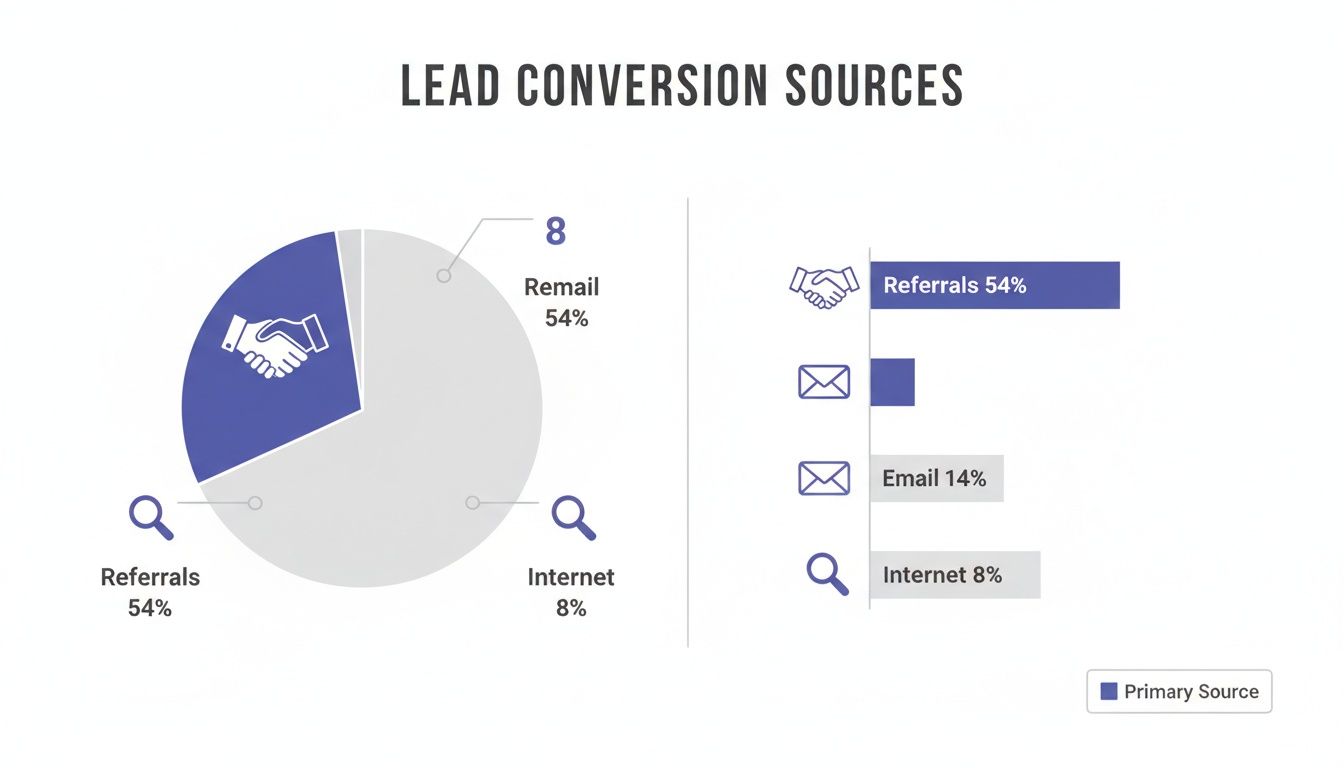
The data doesn't lie. Referrals are king, converting at an incredible 54%. This kind of insight should immediately make you think about how to build a referral program into your growth strategy.
Calculate Profitability with CAC and LTV
Knowing your conversion rates is one thing, but understanding your profitability is what keeps the business running. This is where two of the most important metrics in any business come into play: Customer Acquisition Cost (CAC) and Lifetime Value (LTV).
- Customer Acquisition Cost (CAC): This is the total cost of sales and marketing, think salaries, tools, ad spend, divided by the number of new clients you won in that period. It's the price you pay to get one new customer.
- Lifetime Value (LTV): This is the total revenue you can reasonably expect to generate from a single client over the entire time they do business with you.
A healthy business model needs an LTV that's much higher than its CAC. The classic benchmark is an LTV:CAC ratio of 3:1 or better. If your ratio is 1:1, you're essentially spending a dollar to make a dollar, which means you're not actually making any money on new clients.
Once you have a handle on this data, you can start to scale what works. Automate the repetitive stuff, like enriching your prospect lists and running your initial outreach sequences. This is what frees up your sales reps to do what they do best: build relationships, run killer demos, and close deals.
Use your performance data to constantly refine your ICP and tweak your messaging. This creates a powerful feedback loop that makes your entire client acquisition engine smarter, more efficient, and more predictable over time.
Common Questions from the Sales Trenches
Even with the best game plan, you're going to run into questions as you put this playbook into action. It happens to everyone. Let's tackle some of the most common hurdles I see sales teams and founders struggle with, so you can move forward with confidence.
How Many Times Do I Really Have to Reach Out?
There isn't a magic number, but the data points to somewhere between 5 and 12 touchpoints just to land that first meeting. But here's the thing: the number is less important than what you do with each touch.
Don't just be another "just checking in" email in their inbox. That's a fast track to getting ignored.
Each time you reach out, bring something new to the table. It could be a fresh insight you found about their company, a link to a relevant article, or a short case study. The goal is purposeful persistence, not just annoying repetition. A mix of email, calls, and LinkedIn messages always beats hammering a single channel.
What's a Good Conversion Rate for Cold Outreach?
This will always shift a bit based on your industry and how good your prospect list is, but you need benchmarks to aim for. When it comes to cold email, if you're getting a 1% to 3% reply rate, you're doing well. That's a realistic, solid target.
On cold calls, a good goal is to convert 10% to 15% of your actual conversations into booked appointments.
You can push these numbers higher with two key ingredients: incredibly accurate data and truly personalized messaging.
We see teams using enriched contact data from platforms like Scalelist consistently hitting the upper end of these ranges. It's not luck. They're simply starting the conversation with the right person, armed with the right context from the very first outreach.
Is Cold Calling Actually Dead?
No, not at all. But thoughtless, lazy cold calling is definitely dead, and it should be. Grabbing a random list and just smiling-and-dialing with a generic script is a complete waste of your time and your prospect's.
A "smart call," on the other hand, is a different beast entirely.
This is when you’ve done your homework. You've verified you have the right decision-maker, and you have a specific, relevant reason for the call. When done right, it’s still one of the most effective tools in B2B sales. It’s all about a strategic approach, not just brute force.
Ready to stop guessing and start having more of the right conversations? Scalelist gives you the verified contact info and job-change alerts you need to build a predictable client acquisition engine. Start your free trial today and see the difference for yourself.


